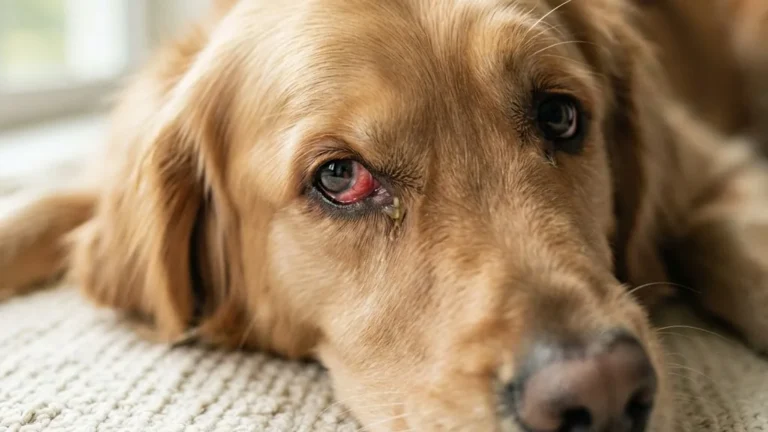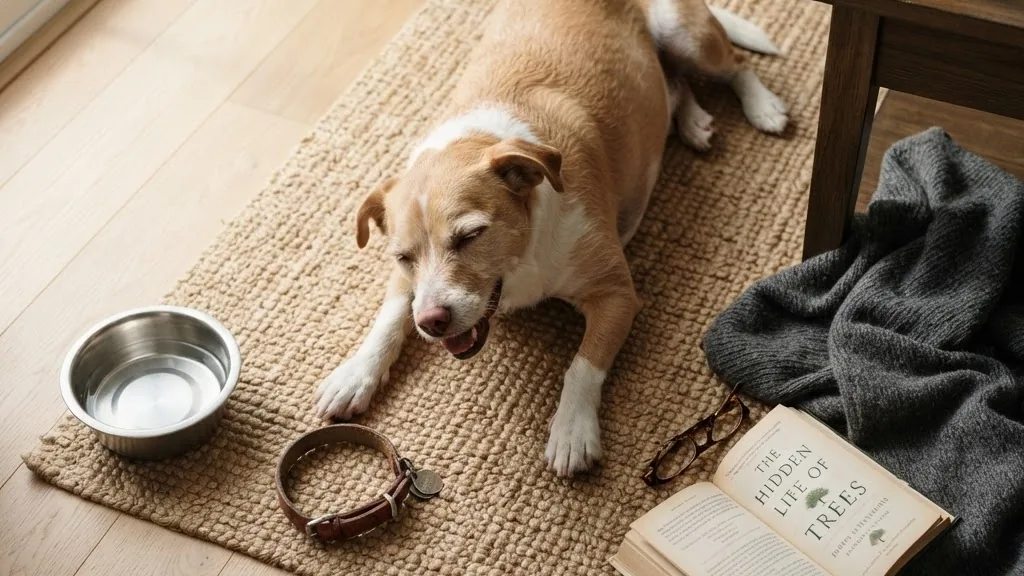
Why is my dog panting while resting is one of the few dog questions with a number attached to the answer, and that number is 30. A dog lying quietly or asleep should breathe 15 to 30 breaths per minute, according to VCA Animal Hospitals, and a resting rate that stays above 30 is the single most useful signal an owner can gather before picking up the phone. Panting at rest is not automatically an emergency, but it is never something to file under “he’s just a hot dog” without first counting. The rest of this guide turns that vague worry into a measurement, then walks each real cause from the harmless to the ones that need a vet tonight.
Quick answer: A dog panting while resting is worth investigating when the panting is new, heavy, or paired with other signs. Count breaths while your dog sleeps: 15 to 30 per minute is normal, and consistently over 30 warrants a vet call, per VCA Animal Hospitals. Common causes include pain, heart disease, Cushing’s disease, respiratory problems, fever, anxiety, and heat. Pale, blue, or brick-red gums, collapse, or labored breathing mean go to an emergency vet immediately. Everything else usually means a scheduled appointment, not a panic.
The 30-breaths-per-minute rule and how to count it at home
The most objective thing you can do for a resting, panting dog is count its breaths, and the threshold that matters is 30 per minute. VCA Animal Hospitals states that a normal breathing rate while resting calmly or sleeping sits between 15 and 30 breaths per minute for all normal dogs, for dogs with symptom-free heart disease, and even for dogs whose heart failure is well controlled with medication. A sleeping breathing rate that is consistently above 30 is considered abnormal and is worth a same-week vet call. This one figure separates a dog who is simply warm from a dog whose lungs may be filling with fluid.
Here is the method VCA recommends, done while your dog is asleep or lying quietly:
- Watch the chest rise and fall. One full in-and-out movement counts as a single breath.
- Time yourself on your phone and count the breaths you observe.
- Multiply by 2 to get the per-minute rate.
- Write it down. Repeat over a few days so you learn your own dog’s baseline.
Do it when the room is cool and your dog is calm, not right after a walk or during a thunderstorm. A study of healthy dogs published in the Journal of Veterinary Cardiology found a mean sleeping respiratory rate of 13 breaths per minute, with no dog averaging above 23. That is why 30 is a genuine ceiling and not an arbitrary guess. If you want the deeper background on nighttime episodes, our guide on dog panting at night and when to worry covers the calm-hours pattern in detail.
Pain and arthritis: the cause owners miss most
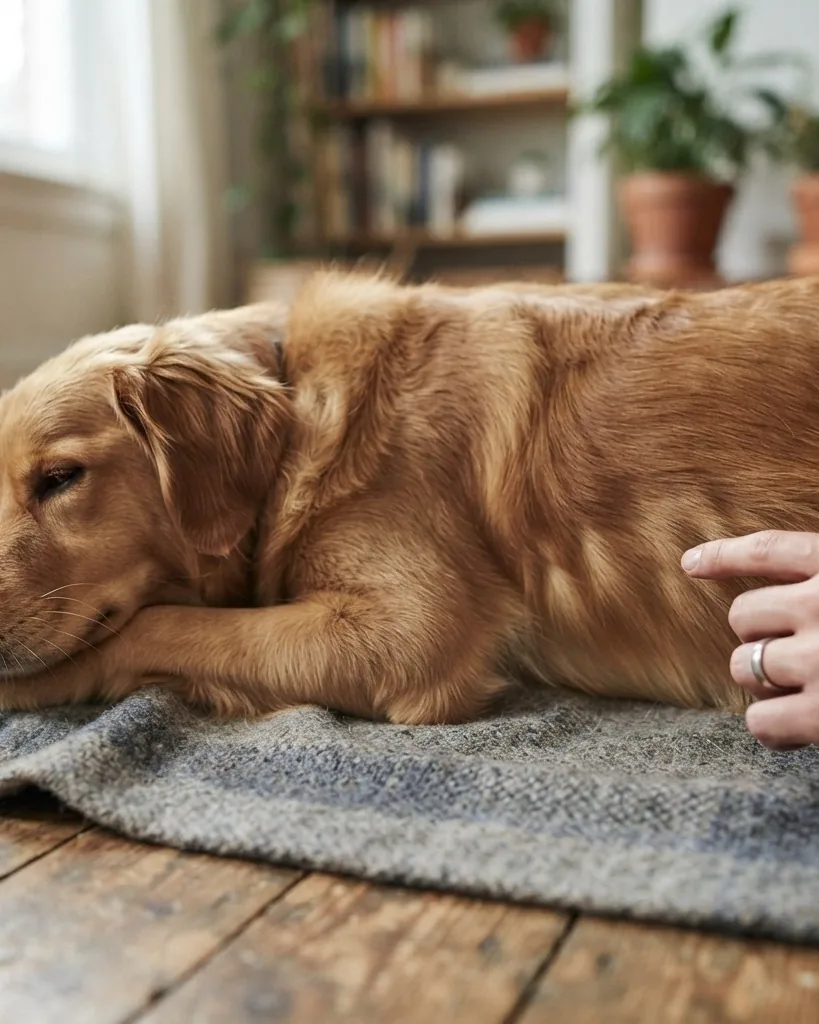
Pain is the quietest reason a dog pants at rest, and it is the one owners overlook because they expect a limp first. Dogs in discomfort often pant before they show any obvious lameness, so the panting arrives days or weeks ahead of the sign you were watching for. A senior dog who suddenly pants while lying in his bed, shifts position constantly, or gets up stiffly may be telling you his joints hurt long before he yelps. Panting is a stress response as much as a cooling one, and chronic pain keeps that response switched on even when the dog is doing nothing at all.
What makes pain-driven panting distinctive is its timing. It tends to worsen in the evening when the dog winds down and has nothing to distract from the ache, and it often pairs with reluctance to jump, a shortened stride, or a dog who no longer settles in his usual spot.
Arthritis is the classic culprit in older and overweight dogs, but pain from an injury, dental disease, or an internal problem can produce the same picture. If your dog is also pawing at his face or chewing oddly, dental pain deserves a look. Our complete dog dental chart and tooth-care guide explains how oral disease hides in plain sight. Do not reach for human painkillers. Many are toxic to dogs, and the Pet Poison Helpline lists common over-the-counter analgesics among frequent canine poisonings.
Heart disease and the resting rate that climbs past 30
An elevated resting breathing rate is one of the earliest warnings of heart trouble, which is exactly why the 30-per-minute number is worth memorizing. VCA Animal Hospitals reports that roughly 80 percent of congestive heart failure cases in dogs trace back to a failing mitral valve, and one of the first things owners notice is faster breathing or heavier panting while the dog rests. When the heart cannot move blood efficiently, fluid backs up into the lungs, and the body compensates by breathing faster. That is why a dog with early heart failure will pant on the sofa while a healthy dog the same age sleeps at 13 breaths per minute.
Veterinary Partner from the Veterinary Information Network puts it plainly: a resting or sleeping rate that climbs above 30 breaths per minute can signal fluid accumulating in the lungs, and it is a reason to contact your vet.
Watch for the cluster that travels with heart disease:
- A soft, recurring cough, often worse at night or after lying down.
- Tiring quickly on walks that used to be easy.
- Restlessness and difficulty finding a comfortable sleeping position.
- A distended belly or gums that look duskier than usual.
The reassuring flip side, per VCA, is that a dog whose heart failure is well managed on medication can still hold a normal 15-to-30 resting rate. The number is not just a diagnostic tool. It is how you and your vet track whether treatment is working, night after night, at home.
Cushing’s disease: the panting that shows up at night
Cushing’s disease deserves its own section because excessive panting is one of its signature signs, and it hits the exact demographic that pants at rest. The Merck Veterinary Manual describes Cushing’s disease, or pituitary-dependent hyperadrenocorticism, as a condition that occurs predominantly in middle-aged to older dogs aged 7 to 12 years. Among dogs with naturally occurring hyperadrenocorticism, roughly 85 percent of cases are pituitary-dependent, and about 15 percent stem from an adrenal tumor. The body produces too much cortisol, and one of the most common clinical signs owners report is heavy, frequent panting, often noticeably worse overnight.
Cushing’s rarely arrives alone. The American Animal Hospital Association’s guidelines on canine hypercortisolism describe a constellation of changes that build slowly over months, which is why they are easy to write off as “just getting old.”
Look for these together with the panting:
- A sharp jump in thirst and urination, with new accidents in a previously house-trained dog.
- A pot-bellied, pear-shaped abdomen from redistributed fat and a weakened body wall.
- Increased hunger, thinning coat, or symmetrical hair loss.
- Muscle weakness and a generally worn-down appearance.
If your senior dog is panting at rest, drinking bowls dry, and developing a droopy belly, ask your vet about testing for Cushing’s specifically. Diagnosis takes bloodwork and hormone testing, and the FDA Center for Veterinary Medicine notes that treatment is a long-term commitment rather than a one-time fix. Cornell University’s Riney Canine Health Center also maintains owner-facing material on the syndrome for anyone wanting a second reputable read.
Heatstroke: the emergency where minutes decide survival
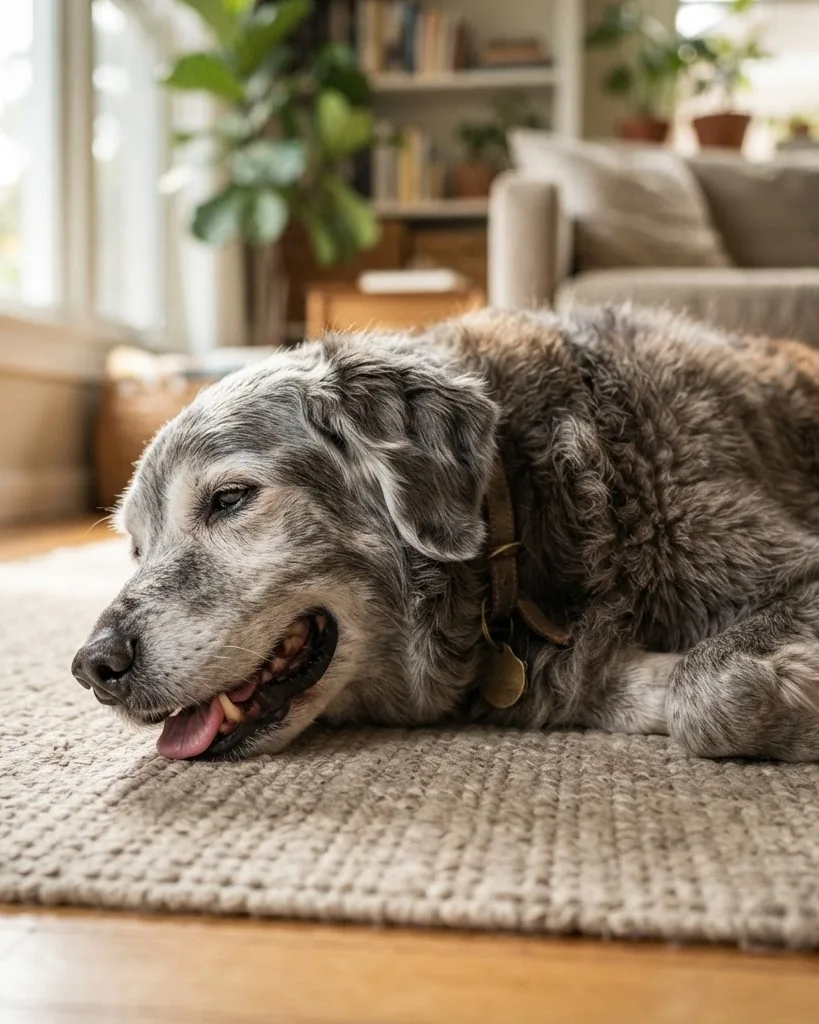
Heatstroke is the one cause of resting panting where you act before you call, because the temperature math is brutal and fast. Cornell University’s Riney Canine Health Center defines a dog’s normal body temperature as 100.5 to 102.5 degrees Fahrenheit, with heatstroke setting in when it reaches 105 degrees Fahrenheit or higher. Dogs cannot sweat to cool down. They have sweat glands only on their paws and rely almost entirely on panting, so when the environment overwhelms that system, core temperature climbs into organ-damaging territory within minutes. Heavy panting that will not slow, drooling, vomiting, weakness, and collapse are the warning signs.
The environment turns dangerous faster than most owners believe. The MSD Veterinary Manual reports that on an 85-degree-Fahrenheit day, the inside of a car can exceed 100 degrees Fahrenheit in 10 minutes and hit 120 degrees Fahrenheit in 35 minutes.
What you do in the first minutes changes the outcome measurably. PetMD notes that cooling a dog before arrival at the hospital raises the survival rate from 50 percent to 80 percent. Cornell advises wetting the dog with cool water and pointing the car’s air conditioning at him on the way in.
- Move the dog to shade or air conditioning immediately.
- Wet the coat with cool, not ice-cold, water, focusing on the belly, armpits, and paws.
- Offer small sips of cool water if the dog can drink.
- Do not pack the dog in ice. Extreme cold constricts blood vessels and slows heat release.
- Drive to a vet even if he seems to recover. Internal organ damage is not visible from the outside.

Brachycephalic breeds and BOAS: why flat-faced dogs pant at rest
Flat-faced breeds pant at rest for a structural reason no amount of rest will fix. Bulldogs, pugs, boxers, and Boston terriers are brachycephalic, meaning their skulls are compressed and their airways are crowded into a shorter space. Many have Brachycephalic Obstructive Airway Syndrome, or BOAS, a bundle of anatomical narrowings that includes pinched nostrils and an overlong soft palate. The result is a dog who has to work harder to move air even while lying still, so panting that would signal a problem in a Labrador can be closer to baseline in a pug. Cornell lists short-muzzle breeds among those at higher risk for heatstroke.
That higher baseline is precisely what makes these breeds tricky. Because they pant and snuffle normally, owners can miss the moment ordinary effort tips into genuine distress.
For a brachycephalic dog, the concerning changes are shifts from that dog’s own normal: louder or more strained breathing, gums that lose their healthy pink, an inability to settle, or panting that continues in a cool, quiet room. These dogs also overheat at temperatures a longer-nosed dog would shrug off, so the car and summer-heat warnings above apply to them with extra force. If you own a flat-faced breed, learning its resting rate and its normal noise level is not optional. It is the only way you will recognize the day the breathing crosses from characteristic to dangerous.
Anxiety, fever, anemia, and medication side effects
Several less dramatic causes still explain a dog panting at rest, and they are worth ruling in or out before you assume the worst. Anxiety is a leading one. Thunderstorms, fireworks, and separation stress all trigger panting even when a dog is physically at rest, and the pattern is telling: the panting tracks the trigger and fades when the trigger passes. Fever and infection push the body to pant as it tries to shed heat, so a dog who is panting, off his food, and lethargic may simply be sick and running warm. Anemia, a shortage of oxygen-carrying red cells, drives faster breathing because the body is starved for oxygen.
Medications matter too. Corticosteroids such as prednisone commonly cause panting as a side effect, and PetMD notes this among the drug-related reasons a dog may pant more than usual.
Anxiety-driven panting usually comes with pacing, whining, clinginess, or trembling, and it responds to a calm, dark, quiet space rather than a vet visit. Fever-driven panting comes with dullness and appetite loss. If your dog started a new medication in the past week and the panting appeared alongside it, mention the timing to your vet before assuming a deeper illness. Not every case of resting panting is a hidden crisis, but distinguishing a stressed dog from a fevered one from a cardiac one is exactly why counting the resting rate first is so useful.
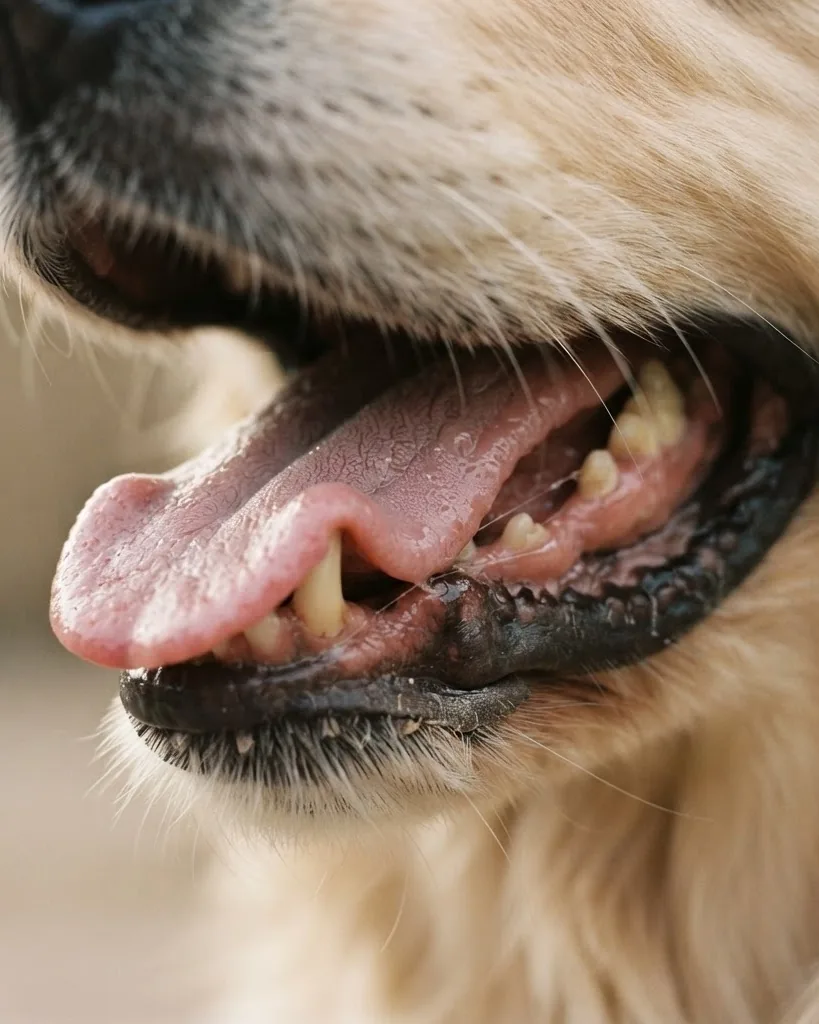
Emergency vs. routine: your decision tree for panting at rest
The hardest part of a panting dog is deciding whether it can wait, so here is a clear split between emergency and routine. Check the gums first, because they are the fastest read on oxygen and circulation. Healthy gums are pink and moist. Gums that are pale, blue, gray, or brick-red are an emergency and mean go now. Pair that with the other red flags, and you have a reliable filter. GSVS emergency veterinarians list confusion, weakness, and collapse among the signs that turn panting into a crisis, and these should never be watched overnight.
Go to an emergency vet immediately if you see any of the following:
- Pale, blue, gray, or bright brick-red gums.
- Labored breathing where the chest and belly heave dramatically.
- Collapse, staggering, disorientation, or seizures.
- Suspected heatstroke or a known toxin or allergen exposure.
- A resting rate well above 30 combined with any sign on this list.
Book a routine or same-week appointment instead when the panting is chronic and isolated, especially in a senior dog, when the resting rate is only mildly elevated but the dog is otherwise bright, eating, and alert, or when you suspect Cushing’s or early heart disease from the slow-building signs above. When in doubt, count the rate twice over a couple of hours as VCA advises. A consistent reading over 30 is your cue to call. For overlapping symptoms that sometimes travel with distress, such as digestive upset, our guides on dog vomiting white foam and its red flags and telling a dog eye infection apart and triaging urgency can help you sort what belongs at the ER from what does not.
Frequently asked questions
Is it normal for my dog to pant while lying down and resting?
Sometimes. A warm room, residual excitement, or recovery after activity can all cause brief resting panting in a healthy dog. The concern is panting that is new, heavy, or paired with a resting breathing rate over 30 per minute, per VCA Animal Hospitals. Count breaths while your dog sleeps. A calm, cool dog averaging near 13 breaths a minute is fine.
How many breaths per minute is dangerous for a resting dog?
A resting or sleeping rate consistently above 30 breaths per minute is considered abnormal, according to VCA Animal Hospitals and Veterinary Partner. That threshold can signal fluid building in the lungs from heart failure. Healthy dogs average around 13 breaths a minute asleep, with none in one Journal of Veterinary Cardiology study exceeding 23. Recount over a couple of hours, then call your vet if it stays high.
Why does my senior dog pant more at night while resting?
Nighttime panting in an older dog often points to pain, heart disease, or Cushing’s disease. The Merck Veterinary Manual notes Cushing’s strikes dogs aged 7 to 12 and causes heavy panting, frequently worse overnight. Pain also worsens in the quiet evening hours. If your senior is also drinking more, developing a pot belly, or coughing, ask your vet to test specifically rather than blaming old age.
Can I use ice to cool a dog who is panting from heat?
No. For suspected heatstroke, use cool, not ice-cold, water on the belly, armpits, and paws, as Cornell’s Riney Canine Health Center advises. Ice constricts blood vessels and can trap heat inside. Cooling a dog before reaching the hospital raises survival from 50 percent to 80 percent, per PetMD, so cool gently and drive to a vet without delay.
My flat-faced dog always pants. When should I worry?
Brachycephalic breeds like pugs and bulldogs pant more at baseline because of Brachycephalic Obstructive Airway Syndrome. Worry when the breathing changes from that dog’s own normal: louder or more strained noise, gums losing their pink color, inability to settle, or panting in a cool, quiet room. Cornell lists short-muzzle breeds among those at higher heatstroke risk, so heat warnings apply with extra force.
The bottom line for a panting, resting dog
A dog panting while resting is a symptom, not a diagnosis, and the fastest way to know how worried to be is to count. Fifteen to 30 breaths per minute asleep is normal territory; a consistent rate above 30 is your signal to call. From there, the cause matters: pain and Cushing’s build slowly and warrant a scheduled visit, while heatstroke, collapse, or dusky gums demand an emergency run where cooling first can lift survival from 50 percent to 80 percent. Learn your dog’s resting rate now, while he is well, so the day something changes you will have a real number instead of a guess.
Panting can also travel with skin, coat, and grooming issues that add to a stressed dog’s discomfort, and choosing the right products helps. If irritation is part of your dog’s picture, our overview of what hypoallergenic dog shampoo can and cannot do lays out realistic expectations without the marketing gloss.