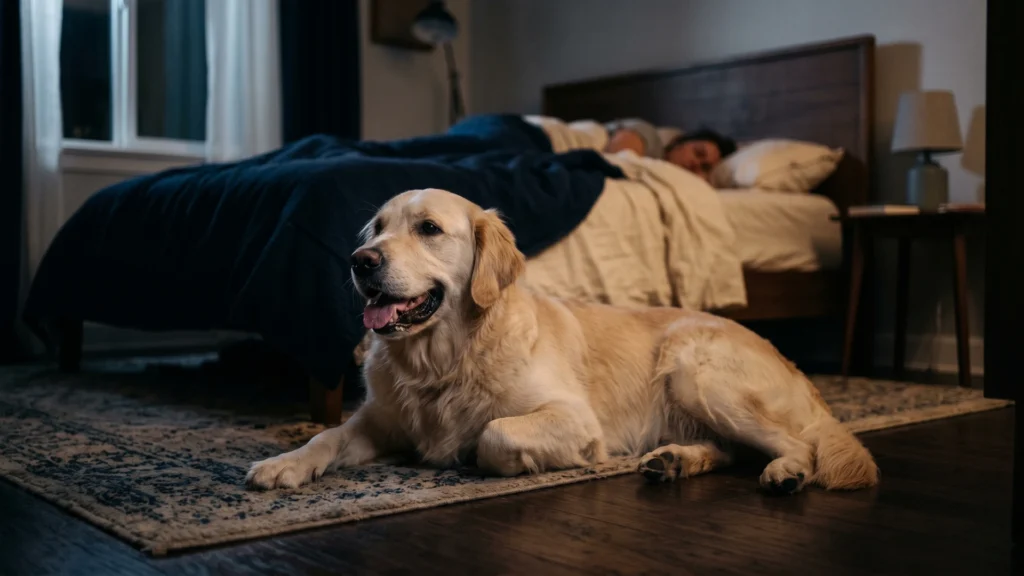
A dog panting at night when the room is cool, the dog is resting, and nothing exciting is happening is the version that should get your attention, because panting at rest is the body asking for more air or trying to cool down or cope with something it cannot otherwise express. Daytime panting after a run or on a hot afternoon is normal plumbing. Nighttime panting in a calm, comfortable dog is a different signal, and it ranges from harmless restlessness all the way to a sign of heart trouble. The trick is learning to read which one you are looking at, and I am going to give you a concrete at-home test that most articles never mention.
I am Cassiel Bendrothe. I write about dog symptoms with one job: separating what you can watch at home from what needs a vet now. Night panting sits across that whole range, so let us work through it carefully. The information here draws on veterinary sources like the American Kennel Club and VCA, linked where it counts, plus the patterns I have seen again and again in worried late-night messages from owners.
Normal Panting Versus the Kind That Matters
Dogs pant to cool off, since they cannot sweat the way we do, and they pant when excited or after exercise. That is all healthy. What you are watching for is panting that does not fit the situation: a dog panting hard in a cool, quiet bedroom, hours after the last walk, with no obvious reason. Add restlessness, pacing, an inability to settle, or panting that wakes the dog from sleep, and you have moved from normal into worth-investigating.
The honest difficulty is that panting is nonspecific. The same behavior can mean the room is a touch warm, the dog is anxious about a storm, or there is fluid building in the lungs. You cannot tell the cause from the panting alone. You tell it from the company the panting keeps and from one simple measurement.
There is a timing clue worth knowing too. Many serious causes, heart disease and respiratory disease in particular, get worse when a dog lies down, because gravity and posture change how fluid sits in the chest. So a dog that pants more the moment it settles flat, or that keeps getting up to stand or sit in a propped position to breathe easier, is showing a pattern that points toward the chest rather than toward simple warmth or nerves. Anxiety panting, by contrast, usually tracks with a trigger you can name: the storm rolled in, the family went to bed, the routine changed. When you cannot name a trigger and the panting worsens with lying down, raise your level of concern.
The One Test Most Owners Never Hear About
Here is the single most useful thing you can do at home, and it is the biggest gap in nearly every other guide on this topic: count your dog’s resting respiratory rate, or RRR. This is the number of breaths per minute while your dog is calm and asleep, not panting, not dreaming with twitchy legs, just quietly resting.
To do it, watch the chest rise and fall while the dog sleeps. One rise plus one fall counts as a single breath. Count for thirty seconds and double it, or count a full minute for accuracy. A healthy dog at rest almost always breathes fewer than 30 times per minute, and many sit around 15 to 25.
Why this matters so much: a sleeping resting respiratory rate that is consistently above 30, especially if it is climbing over days, is one of the earliest and most reliable warning signs of fluid in the lungs from heart disease, as cardiologists and resources like VCA Animal Hospitals emphasize. If your night-panting dog also has an RRR over 30 while genuinely asleep, that is not a wait-and-see situation. Track it for a few nights, write the numbers down, and bring them to your vet. Few things make a vet sit up faster than an owner who shows up with real RRR data.
Common Causes, Roughly From Mild to Serious
Night panting has a long list of possible drivers. These are the ones I see most:
- The room is warm. The simplest cause. Dogs in dense coats overheat easily, and a stuffy bedroom does it. Rule this out first.
- Anxiety and stress. Thunderstorms, fireworks, separation, or a change in routine. Anxious dogs pant, pace, and cannot settle. The panting often comes with a tucked tail or clingy behavior.
- Pain. Arthritis, an injury, dental pain, or a sore belly. Pain frequently gets worse when the distractions of the day fade, which is exactly why it surfaces at night.
- Cognitive dysfunction. In senior dogs, canine cognitive dysfunction scrambles the sleep-wake cycle, much like dementia in people, producing nighttime restlessness, disorientation, and panting.
- Cushing’s disease. This hormonal condition causes excessive panting along with increased thirst, hunger, a pot-bellied look, and hair loss.
- Heart disease and congestive heart failure. One of the most important to catch. Watch for night panting plus coughing, a high resting respiratory rate, tiring quickly, or reduced stamina.
- Respiratory disease. Lung problems, airway disease, or anything that lowers oxygen drives panting, sometimes with discolored gums or tongue.
- Heatstroke. An emergency, with frantic panting, bright red gums, drooling, and a hot body. Rare at night indoors but possible.
- Medication side effects. Steroids in particular can cause panting and increased thirst.
The American Kennel Club’s overview of why dogs pant lays out the normal physiology well, and it is worth reading to calibrate what ordinary panting looks like before you worry about the rest.
Why Age Changes the Likely Cause
The most useful filter is your dog’s life stage, because the odds shift a lot with age. Other guides lump all dogs together; here is a clearer map.
| Life stage | More likely culprits |
|---|---|
| Puppy | Overheating, excitement, new-home anxiety; serious disease is uncommon but not impossible |
| Adult | Anxiety, pain or injury, heat, early heart or hormonal disease in some breeds |
| Senior | Arthritis pain, cognitive dysfunction, heart disease, Cushing’s, kidney issues, cancer |
A young dog panting on a warm night is usually warm. A 12-year-old panting and pacing at 3 a.m. deserves a far lower threshold for a vet visit, because the serious causes cluster in older dogs.
Pain deserves a closer look here because it is the cause owners miss most. Dogs are built to hide pain; it is an instinct from their wild ancestry, where showing weakness was dangerous. During the day, walks, meals, and attention distract a dog from a sore hip or an aching tooth. At night, with the house quiet and nothing to focus on, that low-grade ache becomes the loudest thing in the dog’s world, and panting is one of the few ways a dog has to express it. This is why a senior dog with undiagnosed arthritis so often pants and shifts position all night while seeming fine by day. If your dog is stiff getting up in the morning, slow on stairs, or reluctant to jump onto the couch it used to clear easily, pain is a strong candidate, and it is treatable once a vet confirms it.
Cognitive dysfunction is the other senior-specific cause that catches families off guard. It looks like a dog that wanders the house at night, stares at walls, seems briefly lost in a familiar room, or reverses its day and night entirely. The panting comes from the anxiety and disorientation of a brain that is aging. It is not something to power through with frustration; it is a medical condition with management options, from supplements and diet to environmental routines and, in some cases, medication. Recognizing it for what it is changes how you respond, and it spares both you and your dog a lot of confused, exhausted nights.
Breed Matters Too
Some dogs are wired to pant more or to hide bigger problems. Flat-faced breeds like Bulldogs, Pugs, and Boxers have compromised airways and pant heavily as a baseline, which makes it harder to spot trouble, so any change from their normal deserves attention. Large and deep-chested breeds, and certain lines prone to heart disease, warrant extra watchfulness for the cardiac causes. Knowing your breed’s tendencies helps you judge what counts as a change rather than a constant.
Emergency Triage: What to Do Tonight
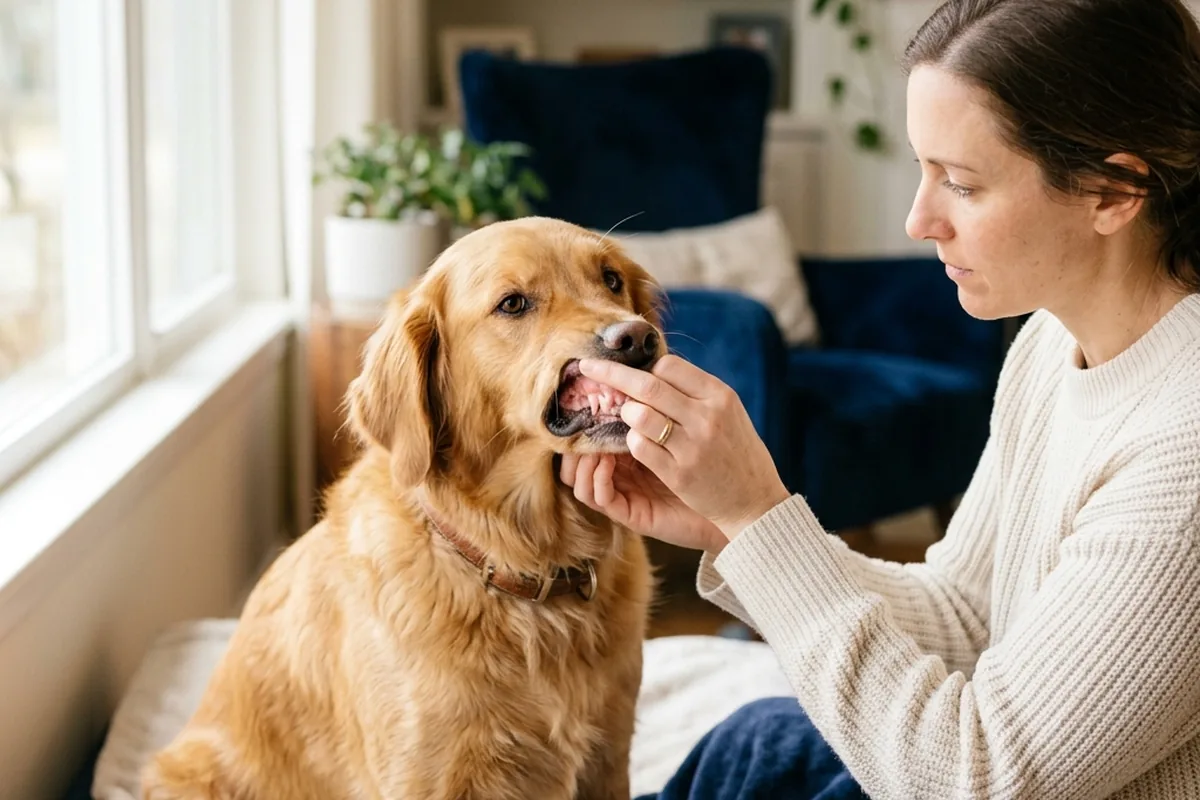
This is a YMYL topic, so let me be exact about urgency. Use the companion signs to decide whether this is an emergency, a next-morning vet call, or something to monitor.
| Panting plus… | Action |
|---|---|
| Blue, gray, or pale gums; collapse; gasping; won’t stop | Emergency vet NOW |
| Resting respiratory rate over 30 asleep, coughing, swollen belly | Emergency or same-day vet |
| Bright red gums, drooling, hot body (possible heatstroke) | Cool the dog and go to the emergency vet |
| Limping, whining, reluctance to move (pain) | Vet within a day; do not give human painkillers |
| Restless, anxious, otherwise normal RRR and gums | Monitor, soothe, mention at next visit |
When in doubt, especially with an older dog or one with a known heart murmur, call the emergency line and describe what you see. Vets would rather field that call than have you wait through a crisis.
What You Can Do at Home for Mild Cases
If your dog’s gums are healthy pink, the resting respiratory rate is normal, and the panting reads as restlessness or mild anxiety, you can help while you keep watch:
- Cool the room. Lower the temperature, add airflow, offer fresh water, and provide a cooling mat for heavy-coated dogs.
- Lower the stress. A quiet, dark space, white noise during storms, and a predictable bedtime routine settle anxious dogs.
- Support sore joints. Orthopedic bedding and a warm, level sleeping spot ease arthritis. Ask your vet about appropriate pain management; never use human medications.
- Keep a log. Note the time, room temperature, what the dog did beforehand, the RRR, and any other signs. Patterns help your vet enormously.
- Stick to routine. For dogs with early cognitive changes, consistent timing and gentle daytime exercise improve nighttime rest.
None of this replaces a diagnosis. It buys you a calmer night while you gather information and book the right appointment. And here is a habit that pays off more than any single fix: take a short phone video of the panting episode, ideally one that captures the breathing rhythm and any pacing. A clip from 2 a.m. is worth more to your vet than the calmest description you can give in a daylight exam room, because dogs often look completely normal once they are in the clinic. Pair that video with your written RRR log and you walk in with exactly the evidence a vet needs to move quickly.
When to See a Vet
Get professional help promptly if any of these apply:
- Panting at rest on a cool night with no clear trigger, especially if it is new or worsening
- A resting respiratory rate above 30 while truly asleep
- Any coughing, especially at night or while lying down
- Pale, blue, or gray gums, collapse, or labored breathing (go now)
- Increased thirst, increased appetite, a pot-bellied look, or hair loss (possible Cushing’s)
- Signs of pain, or a senior dog with new nighttime restlessness
- Your dog is brachycephalic and panting beyond its usual baseline
While you are watching your dog’s overall health, knowing its other symptom patterns helps. If pain seems to be the driver and your dog is favoring a leg, our dog leg brace guide covers support for sore limbs, and if discomfort or restlessness traces to a urinary problem, our piece on treating a dog UTI at home safely walks through the same home-versus-clinic judgment. For dogs whose nighttime fussing involves head-shaking or ear discomfort, our guide on when to use dog ear drops is a useful companion.
How a Vet Will Sort It Out
Expect a thorough exam first. The vet will listen to the heart and lungs, check the gums, feel for pain, and ask about the timeline and your RRR log. Depending on findings, they may run bloodwork, chest X-rays, an ECG, or a heart ultrasound. As the VCA guidance on Cushing’s disease and broader cardiac resources explain, catching the underlying condition early, often signaled by that rising resting respiratory rate, makes a real difference in how well treatment works. For Cushing’s, hormonal blood tests confirm it. For pain or arthritis, a physical exam and imaging guide a pain plan. The point is that night panting is a clue, and the vet’s job is to find what it is pointing at.
Frequently Asked Questions
Is it normal for a dog to pant at night?
Some panting is normal if the room is warm or the dog just settled after activity. Panting in a cool, quiet room while resting, with no clear trigger, is not typical and deserves a closer look, starting with a resting respiratory rate count.
How do I know if night panting is an emergency?
Treat it as an emergency if you see pale, blue, or gray gums, collapse, gasping, panting that won’t stop, or a resting respiratory rate over 30 while asleep paired with coughing. Those point to a breathing or heart crisis and need immediate care.
What is a normal resting respiratory rate for a dog?
A healthy dog at rest or asleep usually breathes fewer than 30 times per minute, often between 15 and 25. A consistent rate above 30 while genuinely sleeping is an early warning sign worth bringing to your vet.
Can anxiety cause my dog to pant at night?
Yes. Storms, fireworks, separation, and routine changes all trigger anxious panting and pacing. If the gums are healthy and the resting respiratory rate is normal, anxiety is a common and more reassuring explanation, though it still deserves management.
Why is my senior dog panting and restless at night?
In older dogs, the top suspects are arthritis pain, cognitive dysfunction, heart disease, and Cushing’s. The serious causes cluster in seniors, so a new pattern of nighttime panting in an older dog warrants a vet visit rather than waiting.
Should I wake my dog if it is panting in its sleep?
If your dog is dreaming, with twitching paws and soft sounds, let it be; that is not the panting to worry about. The concerning kind is heavy, sustained panting in a calm, resting dog. Count the resting respiratory rate while it sleeps to judge.
Bottom Line
A dog panting at night is a signal, not a diagnosis, and the most useful move you can make is to count the resting respiratory rate while your dog sleeps. Under 30 with healthy pink gums and an obvious trigger usually points to heat or anxiety you can manage at home. Over 30 while asleep, or panting paired with coughing, pale gums, collapse, or pain, points to something that needs a vet, sometimes tonight. Watch the company the panting keeps, factor in your dog’s age and breed, keep a simple log, and let your veterinarian make the final call on what it means for your dog.