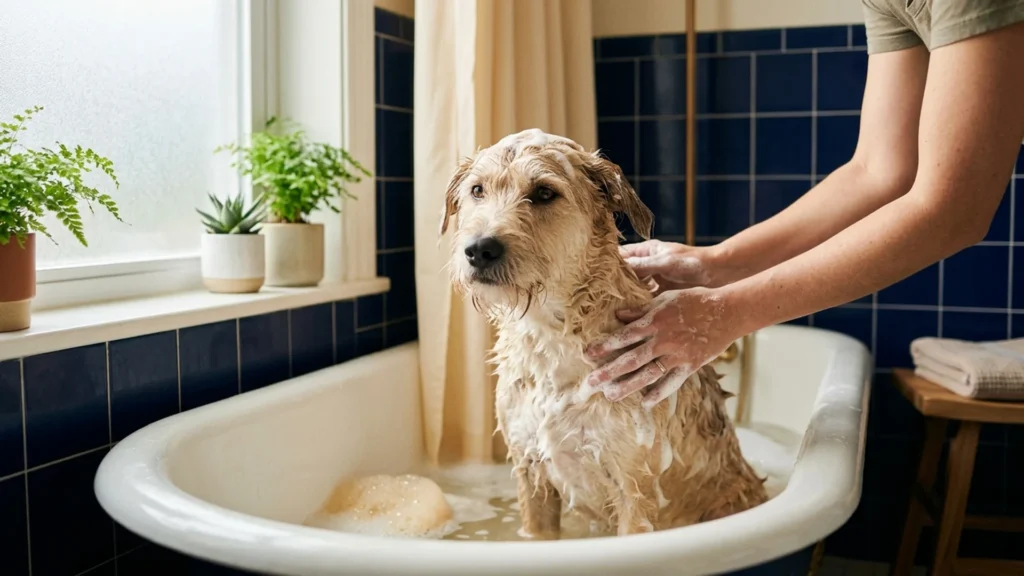
Hypoallergenic dog shampoo is a gentle, low-irritant wash formulated to soothe sensitive or allergy-prone skin and to leave behind as few potential triggers as possible, and the first thing every owner should know is that the word carries no legal definition, so the label alone guarantees nothing. It is a useful tool for an itchy dog. It is also widely misunderstood, because people expect it to cure allergies, and it does not. What it actually does is calm irritated skin, rinse allergens and grime off the coat, and avoid the fragrances and harsh detergents that make sensitive skin worse. Used right, it helps. Treated as a cure, it disappoints and sometimes delays the real fix.
I am Cassiel Bendrothe. I write about dog health and symptoms, and my goal here is to set honest expectations so you spend your money and effort where they actually help your dog. Some of what follows pushes back on marketing claims, on purpose. The guidance leans on veterinary sources like VCA and the American Kennel Club, linked where it matters, and the patterns I have seen in owners chasing an itch with the wrong product.
What Hypoallergenic Actually Means Here
The prefix hypo means less, not none. A hypoallergenic shampoo is designed to have a reduced chance of provoking a skin reaction, usually by leaving out ingredients that commonly irritate dogs and by keeping the formula simple. The catch is that no agency regulates the term for pet products, so any company can print it. That is not a reason to dismiss the category; it is a reason to read the ingredient list instead of trusting the front of the bottle.
It also helps to separate two different things that often get blurred. A true allergy is a systemic immune response to something like pollen or a food protein. Contact dermatitis is a local irritation where a substance touches the skin, including a harsh shampoo itself. A gentle shampoo directly helps with the second and can ease the symptoms of the first, but it does not switch off an underlying allergy.
Why does sensitive skin happen in the first place? Some dogs are simply born with a weaker skin barrier, the thin protective layer that keeps moisture in and irritants out. When that barrier is compromised, by genetics, by allergies, or by repeated harsh washing, everyday substances that a sturdy-skinned dog would shrug off start to provoke redness and itching. Certain breeds are more prone, and so are puppies, seniors, and dogs already battling allergies. Understanding that the barrier is the weak point reframes the whole goal of bathing such a dog: you are trying to clean without further damaging that barrier, which is exactly what a well-made hypoallergenic formula is designed to do, and exactly what a cheap, heavily fragranced shampoo undermines.
The Honest Limit: Shampoo Soothes, It Does Not Cure
This is the section the product pages will never write, and it is the most important one. A hypoallergenic shampoo cannot cure a food allergy or an environmental allergy. Those are immune-system problems that need a real plan: identifying triggers, managing the environment, sometimes medication or a diet trial under a vet’s direction.
What a good shampoo does do is meaningful, and worth doing:
- It physically rinses pollen, dust, and other allergens off the coat, lowering the load your dog carries around. As VCA Animal Hospitals notes in its guidance on canine atopy, frequent bathing can be soothing to itchy, inflamed skin and helps remove allergens from the coat.
- It cleans without the fragrances, dyes, and stripping detergents that aggravate sensitive skin.
- It can calm and hydrate irritated skin between flares, especially formulas with oatmeal and aloe.
So the right framing is this: hypoallergenic shampoo is part of managing an allergic or sensitive dog, not the whole answer. If you are bathing your dog every week and the itching never improves, the shampoo is doing its job and the underlying cause is not being addressed. That gap is your cue to see a vet, not to buy a fancier bottle.
I want to be blunt about why this matters, because the consequences are real. Owners who believe shampoo will fix an allergy often cycle through five or six expensive bottles over several months while the dog stays miserable and the actual problem, say a food-protein allergy or seasonal atopy, goes untreated. During that time the dog keeps scratching, the skin barrier keeps breaking down, and secondary infections set in on the broken skin. The shampoo was never going to win that fight alone. The kinder, cheaper path is to use a gentle shampoo for symptom relief while getting an actual diagnosis early, so the dog gets the medication, diet trial, or environmental changes that address the cause. Think of shampoo as the comfort measure and the vet visit as the treatment.
Ingredients: What to Look For and What to Avoid
The label is where the real decision happens. Here is a scannable reference I wish came printed on the shelf.
| Look for | Avoid |
|---|---|
| Short, fully disclosed ingredient list | Vague terms like “fragrance” or “proprietary blend” |
| Colloidal oatmeal, aloe vera, glycerin | Synthetic fragrances and dyes |
| Mild, gentle cleansers; vitamin E, panthenol | Harsh sulfates (sodium lauryl sulfate) |
| Natural preservatives where possible | Parabens, phthalates, formaldehyde-releasing preservatives |
| Dog-appropriate pH, soap-free or mild soap base | Human shampoo (wrong pH for dogs) |
Two practical notes. First, “fragrance” as a single word can hide dozens of undisclosed compounds, which is exactly what a sensitive dog does not need; a genuinely hypoallergenic product is usually fragrance-free or scented only by named botanicals. Second, a shorter ingredient list is generally safer for reactive skin, because fewer ingredients means fewer chances for one of them to be the problem.
A smart move with any new product, especially on a dog that has reacted to shampoos before, is a patch test. Wash a small area, such as a patch on the flank, rinse it well, and wait a day to see whether the skin reddens or the dog scratches at it. If nothing happens, proceed with a full bath. If you see irritation, you have spared the whole dog a reaction and learned that formula is not the one. It costs you nothing but a little patience, and for a truly sensitive dog it can prevent a setback that takes days to calm back down.
Never Use Human Shampoo
This deserves its own warning. Human skin and dog skin have different pH, and human shampoo, even baby shampoo, disrupts a dog’s skin barrier and can leave it dry, itchy, and more reactive. The American Kennel Club is clear that products made for people are the wrong tool for canine skin. If you are out of dog shampoo, a plain water rinse is a safer stopgap than reaching for your own bottle.
How to Bathe a Sensitive Dog
Technique matters as much as the product. A good shampoo applied badly still leaves an itchy dog. Here is the routine I recommend:
- Brush first. Remove mats and loose hair so water and shampoo reach the skin evenly.
- Use lukewarm water. Warm, never hot. Hot water dries and irritates sensitive skin.
- Dilute if directed. Many gentle shampoos lather better and spread more evenly when diluted with water per the label.
- Give it contact time. Most therapeutic and hypoallergenic shampoos need to sit on the skin for several minutes, often around five to ten, to actually work. Do not rinse it straight off.
- Rinse thoroughly, then rinse again. Leftover residue is a top cause of post-bath itching. When you think you are done, rinse once more.
- Dry gently. Pat with a towel and air-dry or use a cool setting. Aggressive hot blow-drying makes sensitive skin worse.
- Protect eyes and ears. Keep shampoo out of the eyes and water out of the ears.
That contact-time step is the one owners skip most, and it is the difference between a shampoo that soothes and one that just gets the dog wet. The active and soothing ingredients need time in contact with the skin to do anything; lathering and immediately rinsing is like swallowing a pill and spitting it out a second later. Set a timer if you have to, keep the dog calm with a lick mat or a few treats, and let the product work.
The double-rinse advice is not fussiness either. Residue is one of the most common reasons a dog itches more after a bath than before it, and it is completely avoidable. Work the water through the dense areas, the armpits, the groin, behind the ears, and under the tail, where shampoo loves to hide. When the water runs clear and the coat no longer feels slick, rinse one more pass for good measure. A few extra minutes at the tap saves a week of scratching.
How Often Should You Bathe?
More is not better. Over-bathing strips the natural oils that protect the skin barrier, which can leave a sensitive dog itchier than before. Frequency depends on the situation, and your vet’s instructions for a medicated regimen always override general advice.
| Situation | Typical frequency |
|---|---|
| Healthy dog, occasional cleaning | Every 4 to 8 weeks, or as needed |
| Sensitive or allergy-prone, maintenance | Often weekly to biweekly to reduce allergen load |
| Active flare or medicated shampoo | Exactly as your vet directs |
The American Kennel Club’s guidance on bathing frequency reinforces that the right number varies by coat, lifestyle, and skin health, so treat these as starting points and watch how your dog’s skin responds.
Hypoallergenic Versus Medicated Shampoo
These are not the same product, and confusing them wastes time. A hypoallergenic shampoo is a gentle, general-purpose wash for sensitive skin. A medicated shampoo contains active ingredients, such as antifungals, antibacterials, or anti-itch agents, prescribed or recommended by a vet to treat a specific diagnosed problem like a yeast or bacterial skin infection.
If your dog has a diagnosed skin infection, a hypoallergenic shampoo is not enough; you need the medicated one and you need to use it on the schedule the vet sets. If your dog simply has sensitive skin and you want to keep it calm and clean, hypoallergenic is the right call. When in doubt about which camp your dog falls into, that uncertainty is itself a reason to ask the vet.
There is a subtlety worth knowing: the two can be used together in a planned way. Some vets will have you bathe with a medicated shampoo to clear an active infection, then transition to a gentle hypoallergenic formula for ongoing maintenance once the skin is healthy again. The mistake is using a strong medicated product indefinitely with no diagnosis, or using a gentle one on top of an active infection and expecting it to clear. Matching the product to the stage of the problem is the whole game, and it is a decision best made with your vet rather than guessed at in a store aisle.
One more buying caution: ignore dramatic before-and-after marketing photos and customer reviews promising miracles. Skin that calms down after a bath often does so because the previous shampoo was the irritant, not because the new one is magical. A genuinely good hypoallergenic shampoo is unremarkable in the best way; it cleans, it does not sting, it leaves no heavy scent, and it does not provoke a reaction. That quiet reliability, not a flashy claim, is what you are paying for.
When to See a Vet
Shampoo is supportive care, not a substitute for diagnosis. See your veterinarian if any of these are true:
- The itching, redness, or scratching does not improve after a week or two of gentle bathing
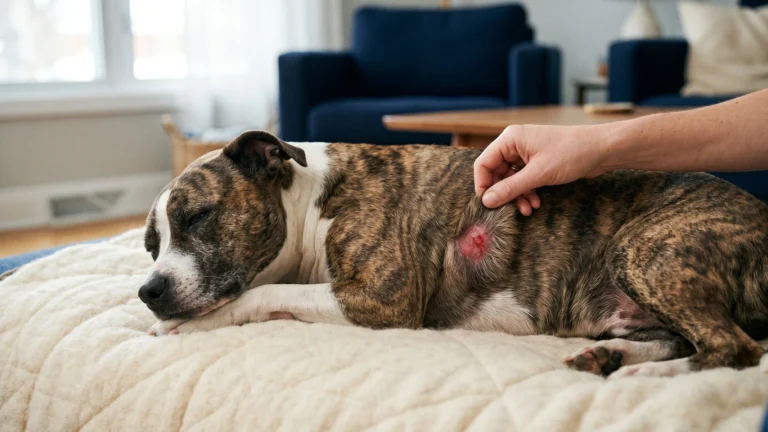
- You see hot spots, open sores, oozing, crusting, a bad smell, or significant hair loss
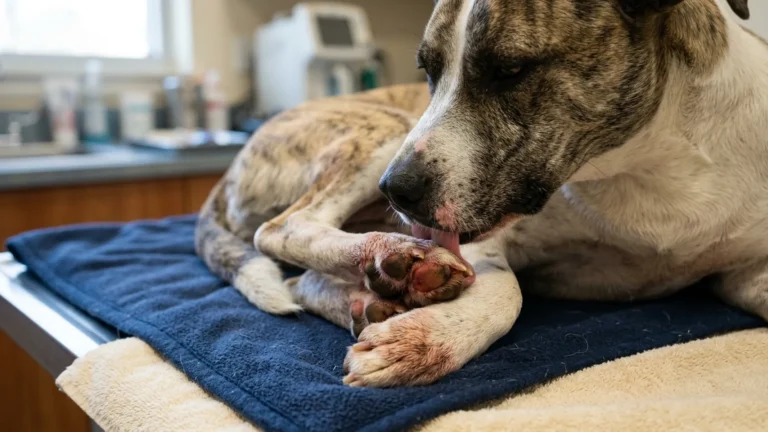
- Your dog chews its feet, face, or rear relentlessly
- The skin problems keep coming back season after season
- There are signs of infection rather than simple dryness
- Your dog seems uncomfortable, restless, or unwell overall
Recurring or worsening skin trouble almost always traces back to an underlying allergy or infection that shampoo alone cannot fix. While you are managing your dog’s skin, it helps to recognize related symptoms. If a scratched-raw patch has flared up, our guide on the home care judgment for a dog UTI uses the same when-to-treat-versus-when-to-call logic, and if your dog’s itching centers on the ears, our piece on when to use dog ear drops covers that link. For a dog whose skin soreness has it favoring a leg, our dog leg brace guide is a useful companion.
Frequently Asked Questions
Does hypoallergenic dog shampoo cure allergies?
No. It soothes irritated skin and rinses allergens off the coat, which helps with symptoms, but it cannot cure a food or environmental allergy. Those need a vet-directed plan. Treat shampoo as one supportive part of managing an allergic dog.
How do I know if a shampoo is truly hypoallergenic?
Read the ingredient list, not the front label, since the term is unregulated. Look for a short, fully disclosed list with gentle cleansers and soothing ingredients like oatmeal and aloe, and avoid synthetic fragrances, dyes, sulfates, and parabens.
Can I use human shampoo on my dog in a pinch?
No. Human shampoo has the wrong pH for dogs and can dry out and irritate their skin. If you are out of dog shampoo, a plain lukewarm water rinse is a safer stopgap until you can get the right product.
How often should I bathe my allergy-prone dog?
Many sensitive or allergic dogs benefit from weekly to biweekly baths to reduce allergen load, but over-bathing strips protective oils. If your vet has prescribed a medicated schedule, follow that exactly, and watch how your dog’s skin responds.
What is the difference between hypoallergenic and medicated shampoo?
Hypoallergenic shampoo is a gentle, general wash for sensitive skin. Medicated shampoo contains active ingredients to treat a diagnosed condition like a yeast or bacterial infection, and it should be used on a vet’s schedule. They serve different purposes.
My dog still itches after switching to hypoallergenic shampoo. What now?
That usually means an underlying allergy or infection is driving the itch, and shampoo cannot reach it. Stop assuming the product is the problem and book a vet visit to identify the real cause and start appropriate treatment.
Bottom Line
Hypoallergenic dog shampoo is a genuinely helpful tool for sensitive and allergy-prone skin, as long as you understand its job. It soothes, it cleans gently, and it rinses allergens off the coat. It does not cure allergies, and the label alone proves nothing, so read the ingredients and judge the formula on its merits. Bathe with lukewarm water, give the shampoo real contact time, rinse twice, and do not over-wash. Most importantly, if the itching persists or the skin shows signs of infection, the answer is a veterinarian, not a different bottle. Use this as your buying and bathing guide, and let your vet handle the underlying cause.