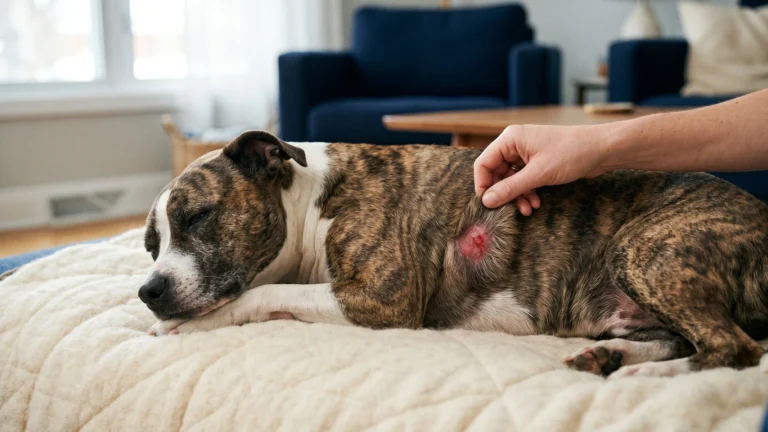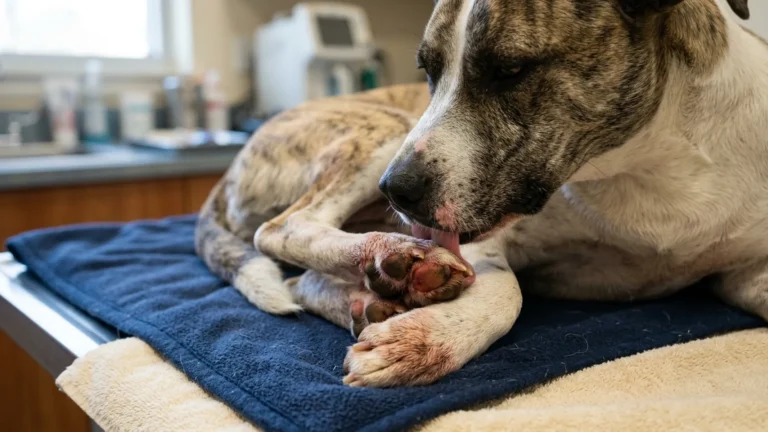
A dog throwing up white foam is usually bringing up a mix of saliva and stomach fluid on an empty stomach, which is often harmless, but it can also be the first warning of bloat, a condition that can kill within hours. That single sentence is why this symptom deserves a careful read rather than a shrug. Most of the time, white foam means an irritated or empty stomach and the dog is otherwise fine. Some of the time, it is the opening sign of a true emergency. Knowing the difference, fast, is the whole point of this guide, and I am going to give you the specific signs that separate one from the other.
I am Cassiel Bendrothe. I write about dog symptoms with a single focus: telling you plainly what you can watch at home and what cannot wait. This topic sits on the sharpest version of that line, because the stakes at the dangerous end are as high as they get. The guidance here leans on veterinary sources like the American Kennel Club and VCA, linked where it matters, alongside the patterns I have watched in countless worried-owner cases.
What White Foam Actually Is
The foam itself is not mysterious. When a dog’s stomach is empty, there is no food to bring up, so what comes out is saliva and gastric secretions whipped into a froth by the heaving. The color tells you a little: pure white usually means saliva and stomach fluid, while a yellow tint means bile has come up from further down. Neither color is a diagnosis on its own. The color is a clue, not the answer; what matters far more is how often it happens and what else is going on with your dog.
One distinction the popular pages skip is worth getting right. Vomiting is active, with abdominal heaving, retching, and effort. Regurgitation is passive, where food or fluid slides back up without that effort, often soon after eating. They point to different problems, so when you describe this to a vet, noting whether your dog heaved hard or just brought it up quietly genuinely helps narrow the cause.
It also helps to step back and notice the whole dog rather than fixating on the foam. A symptom in isolation tells you very little; a symptom in context tells you almost everything. Is your dog bright, wagging, and asking for breakfast right after the episode, or hunched, quiet, and refusing to settle? Is the belly its normal shape, or does it look or feel fuller and tighter than usual? Are the gums a healthy bubblegum pink, or pale and tacky? These three quick checks, demeanor, belly, and gums, take fifteen seconds and do more to sort a minor upset from a developing emergency than the appearance of the vomit ever will. Train yourself to run them every time, because in a real crisis you will not have to think about it.
The Danger You Must Rule Out First: Bloat
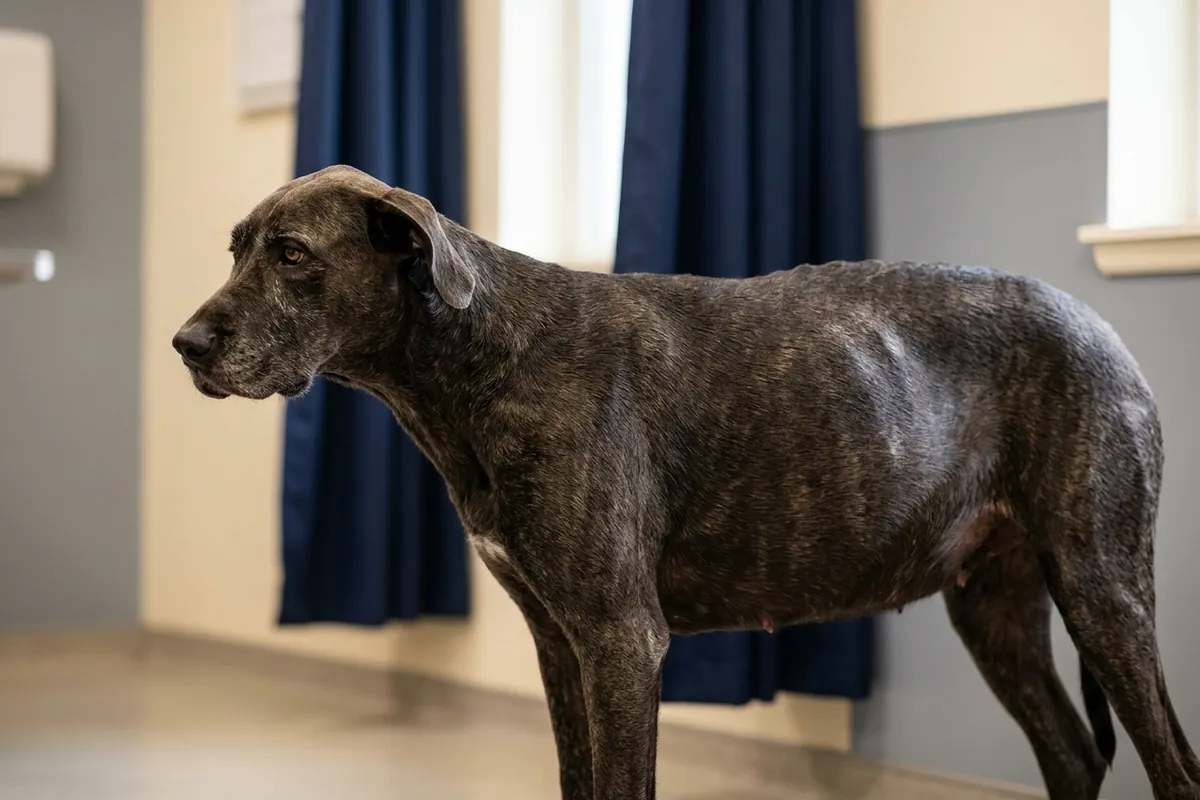
Before anything else, learn this, because it can save your dog’s life. Bloat, known medically as gastric dilatation and volvulus or GDV, is when the stomach fills with gas and twists on itself, cutting off blood flow. It is a true emergency measured in minutes to a few hours, not a wait-until-morning problem. White foam can be one of its earliest signs, which is exactly why this symptom cannot always be brushed off.
The classic bloat picture is a dog that is:
- Retching or heaving repeatedly but producing little or nothing, sometimes just white foam
- Drooling heavily
- Showing a swollen, tight, or distended belly
- Restless, pacing, unable to get comfortable, or trying to vomit again and again
- Weak, collapsing, with pale gums and a racing heart as it worsens
If you see unproductive retching plus a bloated belly plus restlessness, do not wait, do not feed, do not try home remedies. Go to an emergency vet immediately. As the American Kennel Club and VCA both stress in their guidance on bloat, survival depends on speed, and surgery is often required. I would rather you make ten unnecessary emergency trips than miss the one that counts.
Which Dogs Are Most at Risk for Bloat
This is the breed information missing from nearly every article on the symptom, and it should change how quickly you act. Bloat overwhelmingly strikes large, deep-chested breeds. If your dog is on this list, treat white foam plus retching with extra urgency:
- Great Danes (the highest risk of all)
- German Shepherds
- Standard Poodles
- Weimaraners
- Boxers, Doberman Pinschers, Irish Setters, and other large deep-chested dogs
- Saint Bernards and other giant breeds
Risk also rises with eating one large meal a day, eating too fast, vigorous exercise right after eating, stress, and older age. A small dog can still get an upset stomach and foam, but bloat is far less likely. A Great Dane retching foam is a different level of alarm than a terrier doing the same, and you should respond accordingly.
I want to underline why the breed factor changes the math so much. With bloat, the window between the first sign and a life-threatening crisis can be under an hour, and once the stomach twists, the clock is brutal. For a high-risk dog, that means you do not get to take a wait-and-see approach the way you might with a small dog who threw up once and is now begging for a treat. The cost of being wrong is wildly asymmetric: an unnecessary emergency visit costs you money and an evening, while a missed bloat costs the dog its life. If you own a giant or deep-chested breed, I genuinely want you to over-react to unproductive retching. Vets who treat bloat will tell you the same thing, because the dogs they save are almost always the ones whose owners moved fast.
The More Common, Less Scary Causes
Most white-foam episodes are not bloat. The usual, more manageable causes include:
- Empty stomach and bile buildup. Classic early-morning vomiting of white or yellow foam in a dog whose stomach has been empty too long. Often improves with a small bedtime snack.
- Dietary indiscretion. Eating grass, trash, table scraps, or something that did not agree with the stomach.
- Eating too fast or exercising right after a meal.
- Acid reflux or mild gastritis. Irritation of the stomach lining.
- Kennel cough or respiratory irritation. A honking cough can end in white foam that looks like vomit but is coming from the airway.
- Pancreatitis. Often triggered by fatty food, and usually paired with belly pain, weakness, and repeated vomiting. This one needs a vet.
- Toxins or foreign objects. Both can cause foaming and both can be serious.
- Parasites or underlying illness.
The single most reassuring pattern is one episode of white foam in a dog who then acts completely normal, eats, drinks, and plays. The most worrying pattern is repeated episodes, or any episode paired with the red flags below.
Reading the Color: A Quick Decoder
| What you see | Often suggests |
|---|---|
| White foam | Saliva and stomach fluid, empty stomach, mild irritation; or early bloat if retching is unproductive |
| Yellow foam | Bile from an empty stomach (bilious vomiting) |
| Foam with blood or coffee-ground specks | Stomach bleeding or ulcer; see a vet |
| Foam plus a swollen, hard belly | Possible bloat; emergency now |
Severity Triage: What to Do Right Now
| Situation | Action |
|---|---|
| Unproductive retching, distended belly, restless, drooling | Emergency vet NOW (possible bloat) |
| Vomiting 3+ times in 24 hours, lethargy, pain, or blood | Same-day or emergency vet |
| Suspected toxin or swallowed object | Call the vet or poison line immediately |
| One episode, dog acts normal, eats and drinks | Monitor and use gentle home care |
Safe Home Care for a Mild, Single Episode

If your dog threw up white foam once, has a healthy pink gum color, a normal-shaped belly, and is otherwise bright and acting like itself, you can manage at home while you watch:
- Rest the stomach. Withhold food for a few hours, generally no more than 6 to 12 in an adult dog. Puppies and small dogs should not be fasted long; when in doubt, call the vet.
- Offer water in small amounts. Let the dog sip rather than gulp, which can trigger more vomiting.
- Reintroduce a bland diet. Once a few hours pass with no vomiting, offer a small amount of plain boiled chicken and white rice, then build back to normal food over a day or two.
- For empty-stomach morning foam, a small snack before bed often prevents the bile buildup that causes it.
- Watch closely. Any escalation, repeated vomiting, lethargy, or a changing belly means you stop home care and call the vet.
Do not give human anti-nausea or pain medications. Many are toxic to dogs, and they can mask a worsening emergency. If the simple measures above do not settle things quickly, the vet takes over.
When to See a Vet
This is a YMYL topic and the dangerous end is fatal, so I will be direct. Get veterinary help, often urgently, if you see any of these:
- Unproductive retching, a swollen or hard belly, restlessness, or pacing (suspect bloat, go now)
- Vomiting three or more times in 24 hours, or repeated foam over hours
- Lethargy, weakness, collapse, or pale gums
- Blood in the foam, or a coffee-ground appearance
- Signs of abdominal pain, a hunched posture, or crying when touched
- Refusal to eat or drink, or it cannot keep water down
- Known or suspected toxin or foreign-object ingestion
- Your dog is a large, deep-chested breed and is retching foam
While you are tracking digestive symptoms, knowing your dog’s other patterns helps you act faster overall. If your dog also shows urinary trouble, our guide on treating a dog UTI at home safely uses the same home-care-versus-clinic judgment, and if discomfort or restlessness has your dog favoring a leg, our dog leg brace guide covers support for sore limbs. For a dog whose distress involves head-shaking or ear pain, our piece on when to use dog ear drops is a useful companion.
How a Vet Will Sort It Out
For repeated vomiting or any suspicion of bloat, expect a fast, focused workup. The vet will examine the belly, check gum color and hydration, and ask about timing, diet, and the exact look of the vomit. If bloat is suspected, an X-ray confirms it quickly, and treatment is urgent decompression and often surgery. As VCA’s guidance on vomiting in dogs describes, for less urgent cases the vet may run bloodwork, check for parasites, image the abdomen, and treat the specific cause, whether that is gastritis, pancreatitis, a dietary problem, or something swallowed. The reassuring truth is that most white-foam cases turn out minor, but the only safe way to treat the symptom is to respect the small chance that it is not.
How to Lower the Risk
You cannot prevent every upset stomach, but you can reduce both routine vomiting and bloat risk. Feed two or three smaller meals rather than one large one, especially for big dogs. Slow down fast eaters with a slow-feeder bowl. Avoid vigorous exercise right before and after meals. Keep trash, table scraps, and toxins out of reach. For high-risk breeds, talk to your vet about a preventive surgery called gastropexy, which tacks the stomach in place and dramatically lowers the chance of the deadly twist. A small bedtime snack helps dogs prone to early-morning bile vomiting.
The gastropexy point deserves emphasis for owners of giant breeds, because it is one of the few times you can take a fatal risk and shrink it dramatically with a single planned decision. Many owners have it done at the same time as a spay or neuter, so the dog goes under anesthesia only once. It does not make bloat impossible, but it makes the deadly twisting form far less likely, which is the part that kills. If you are bringing home a Great Dane puppy, that conversation belongs on your first-year vet checklist, not in the emergency room at midnight.
Stress management matters more than people expect, too. Dogs that bolt their food in a chaotic, competitive household, or that get worked up at mealtimes, swallow more air and eat faster, both of which feed bloat risk. A calm feeding spot, a predictable routine, and separating dogs that compete over food are small changes that quietly lower the odds. None of this is a guarantee, but stacked together these habits move the needle, and for a high-risk dog every bit of margin counts.
Frequently Asked Questions
Is a dog throwing up white foam always serious?
No. A single episode in a dog who then acts normal is usually a mild, empty-stomach or irritation issue. It becomes serious when it repeats, when red flags appear, or when it comes with unproductive retching and a swollen belly, which can mean bloat.
How do I know if it is bloat?
Bloat shows up as repeated retching that produces little or nothing, a swollen, tight belly, heavy drooling, and restlessness, progressing to weakness and pale gums. It is a minutes-to-hours emergency, especially in large, deep-chested breeds. Go to an emergency vet immediately.
What does it mean if my dog throws up white foam in the morning?
Early-morning white or yellow foam often means the stomach has been empty too long and bile or acid has built up. A small snack before bed frequently prevents it. If it keeps happening or your dog seems unwell, see your vet.
Should I feed my dog after it throws up white foam?
For a mild single episode, rest the stomach for a few hours, then offer a small bland meal like boiled chicken and rice. Do not feed if you suspect bloat. If vomiting continues or your dog will not keep water down, call the vet instead of feeding.
Can kennel cough cause white foam?
Yes. A strong, honking cough can end with a dog bringing up white foam from the airway, which looks like vomiting but is respiratory. If the foam comes after coughing fits, mention that to your vet, since the cause and treatment differ from a stomach problem.
When is white foam an emergency?
Treat it as an emergency with unproductive retching plus a distended belly, vomiting three or more times in 24 hours, blood in the foam, collapse, pale gums, suspected poisoning, or any large deep-chested dog retching foam. When unsure, call the emergency line.
Bottom Line
A dog throwing up white foam is usually a minor, empty-stomach problem, but it sits next to one of the deadliest canine emergencies, so it earns a careful look every time. Check the belly, count the episodes, watch the gums, and know your breed’s risk. One episode in a bright, normal dog usually means gentle home care and a watchful eye. Unproductive retching with a swollen belly, repeated vomiting, blood, or a high-risk breed means the emergency vet, now. Use this as your map for sorting calm from crisis, and let your veterinarian make the final call on your dog.