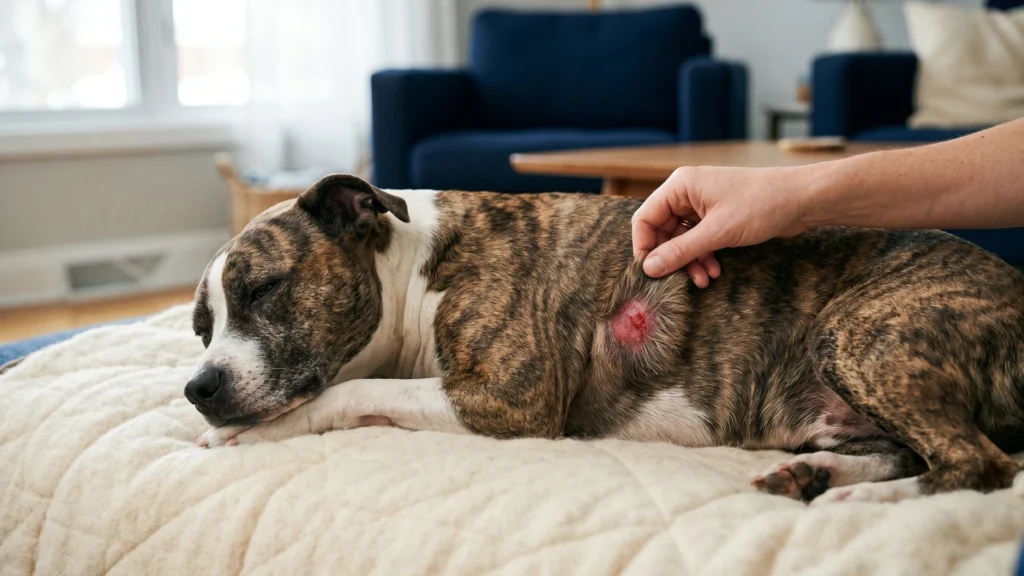
A dog hot spot is a raw, oozing patch of inflamed skin that flares up fast, often within hours, when a dog licks, chews, or scratches one itchy spot until the skin breaks open. Vets call it acute moist dermatitis or pyotraumatic dermatitis. I have seen owners swear the lesion was not there at breakfast and was the size of a silver dollar by dinner. That speed is the whole problem, and it is also the reason a hot spot scares people more than it usually needs to. Most are treatable. A few are warning signs of something deeper. This guide walks you through both.
I am Cassiel Bendrothe, and I write about dog health and symptoms the way I wish more sources did: plainly, with a clear line between what you can handle at home and what belongs in a clinic today. Hot spots sit right on that line, so let us be precise about which side yours is on. Everything below leans on published veterinary guidance from sources like Cornell, VCA, and the American Kennel Club, linked in context, paired with the patterns I have watched play out across countless owner cases.
What a Hot Spot Actually Is
Underneath the mess, a hot spot is a small skin wound that got infected because the dog would not leave it alone. Something itches or stings. The dog licks. Licking keeps the area warm and wet, which is exactly what surface bacteria love. Bacteria multiply, the skin gets more irritated, the dog licks harder, and you have a self-feeding loop. The Cornell Riney Canine Health Center describes this as the itch-lick cycle, and breaking that cycle is the single most important thing you will do.
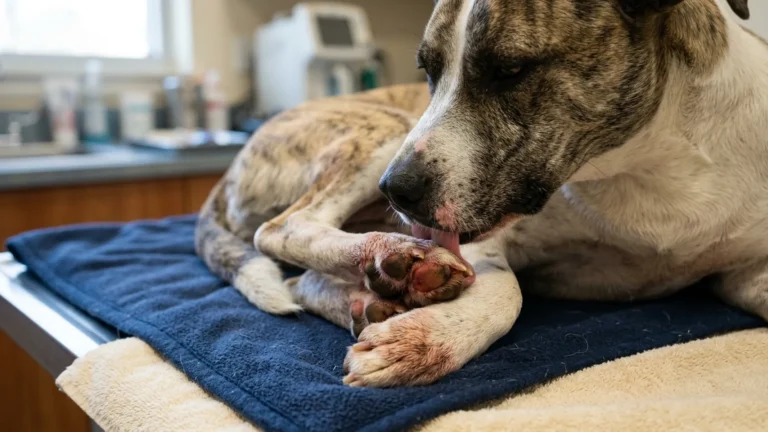
The lesion itself is usually red, moist, and well-defined against the surrounding fur. It may ooze clear fluid or pus, give off a sour smell, and the hair over it often mats down or falls out. Hot spots show up most on the cheeks, neck, hip, and the base of the tail, but they can appear anywhere a dog can reach with tongue or paw. The Cornell Riney Canine Health Center notes how quickly these lesions can balloon once the cycle gets going, which is why early action beats waiting.
One thing worth saying out loud: the speed of a hot spot is deceiving. Because it appears almost overnight, owners assume it must be something dramatic, like a bite or a burn. Usually it is not. It is ordinary skin that lost a fight with an ordinary itch. That reframe helps, because it points you at the right fix, which is the itch, not the wound.
Here is a detail the big pet sites tend to gloss over: a hot spot is a symptom, not a disease. The raw patch is the visible end of a chain that started somewhere else. If you treat only the skin and ignore the trigger, you will be back here in a month with a new one in a new place.
What Causes a Hot Spot
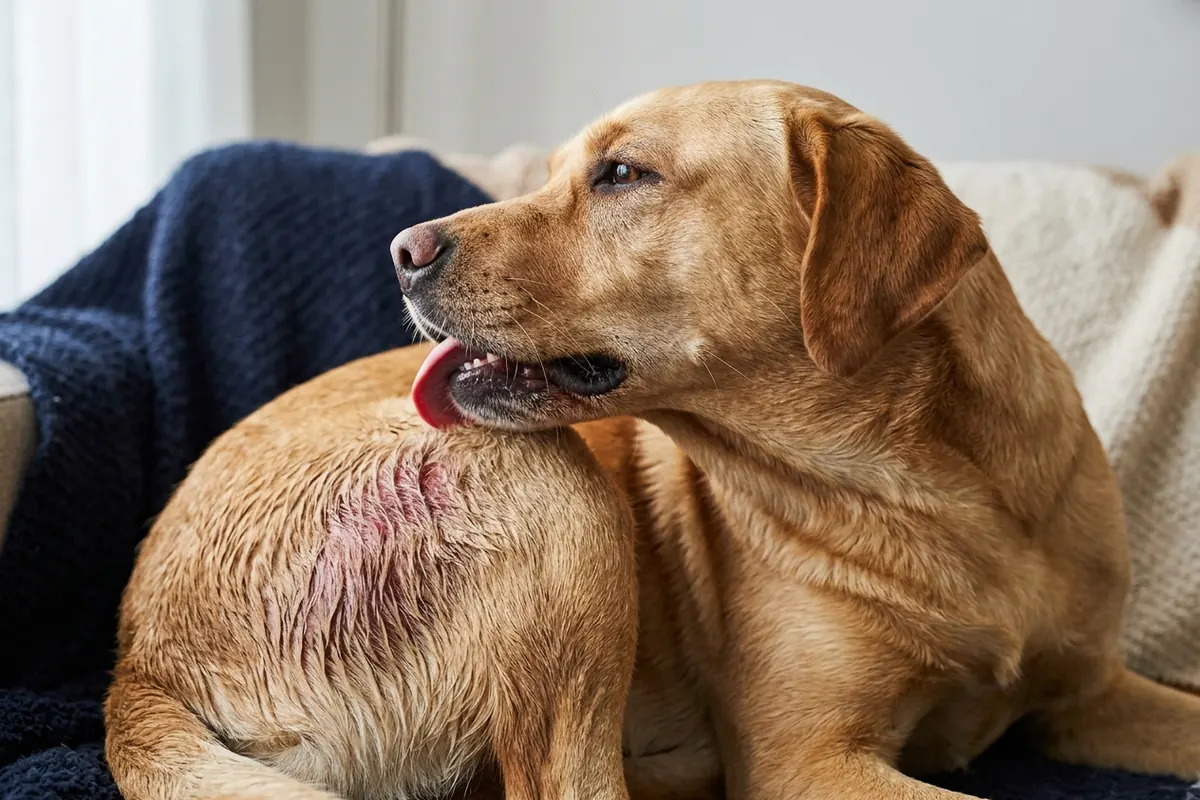
Anything that makes a dog itch in one spot can start a hot spot. The usual suspects, roughly in order of how often I see them blamed:
- Fleas and flea-bite allergy. A single bite on a sensitive dog can set off a frenzy of chewing. This is the most common trigger by a wide margin.
- Environmental and food allergies. Pollen, dust mites, grasses, and certain proteins keep the skin inflamed and itchy season after season.
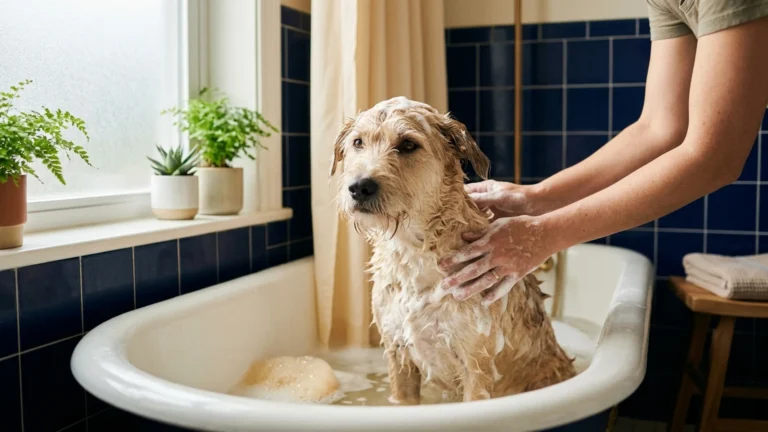
- Trapped moisture. Dogs who swim, get bathed and not dried fully, or have dense double coats hold dampness against the skin. Thick-coated breeds like Golden Retrievers, Labradors, German Shepherds, Saint Bernards, and Rottweilers are over-represented for this reason.
- Ear infections. An itchy, painful ear gets scratched, and the hot spot lands on the cheek or under the ear flap.
- Matted or dirty coat and poor grooming. Mats trap moisture and skin debris.
- Pain underneath. Arthritis or a sore joint can make a dog lick the skin over it. A hot spot over a hip or knee in an older dog is sometimes a joint clue in disguise.
- Anal gland trouble. Full or infected glands send a dog after the tail base.
- Boredom and stress. Some dogs lick simply because they have nothing better to do, and a hot spot follows.
Notice how many of those have nothing to do with the skin itself. That is why a good vet visit looks past the lesion and asks what is driving it.
How to Tell a Hot Spot From Its Lookalikes
This is the section most articles skip, and skipping it leads to wrong treatment. Several conditions can resemble a hot spot at a glance. Getting it right matters because the fixes differ.
| Condition | Looks like | How it differs from a hot spot |
|---|---|---|
| Hot spot | Red, moist, oozing, sudden, painful | Appears in hours, wet surface, dog won’t stop licking it |
| Ringworm | Round, scaly, hair loss | Dry and crusty, not oozing, often a clear ring, contagious to people |
| Mange (mites) | Patchy hair loss, itch, crusts | Spreads over wider areas, slower onset, needs skin scrape to confirm |
| Pyoderma (deeper infection) | Pustules, redness, crusting | More widespread, bumps and pus-heads rather than one wet patch |
| Lick granuloma | Raised, firm, raw sore on a leg | Chronic, thickened skin from long-term licking, not a sudden wet flare |
If the patch is dry and ring-shaped, suspect ringworm and do not start hot spot care, because antiseptic sprays will not touch a fungus and ringworm spreads to humans. When you are not sure, that uncertainty itself is a reason to have a vet look.
Grading Severity: Mild, Moderate, or Severe
Not every hot spot needs a clinic, and not every one is safe to treat at home. I use a simple three-tier read that I wish came standard on every pet-health page.
| Severity | What you see | What to do |
|---|---|---|
| Mild | Smaller than a quarter, surface only, mild redness, dog still eats and acts normal | Home care below, watch closely for 48 hours |
| Moderate | Coin-sized to palm-sized, oozing, clearly painful, spreading | Call your vet within a day; likely needs prescription care |
| Severe | Large, deep, foul-smelling, pus, fever, lethargy, or near the eyes/genitals | Same-day vet visit, no home experiments |
Anything on the face near the eyes, anything that makes the dog flinch hard when touched, and anything in a puppy, a senior, or a dog with other health problems gets bumped up a tier in my book. When in doubt, treat it as the next level up.
Home Care for a Mild Hot Spot
If the patch is small, the dog is otherwise well, and you are confident it is a hot spot and not a lookalike, you can start care at home while you watch it. The goals are simple: stop the licking, dry the area out, and keep it clean.
- Trim the fur around it. Use blunt-nosed scissors or a clipper to clear hair from the lesion and a margin around it. Air reaches the skin and you can actually see what is happening. This step alone speeds healing more than any cream.
- Clean gently. Rinse with cool water or a dilute, vet-safe antiseptic like chlorhexidine. Pat dry. Do not scrub.
- Keep it dry. Moisture feeds the problem. No ointments that trap dampness on a weeping wound.
- Stop the licking. A recovery cone, a soft collar, or a recovery suit is not optional. The wound cannot heal while the tongue keeps reopening it.
- Address the trigger. Check for fleas and treat them. Dry the ears. Brush out mats elsewhere.
- Watch the clock. A mild hot spot under good home care should start drying and shrinking within two to three days.
If it has not clearly improved in 48 hours, or it grows at any point, move to the vet. Worsening despite care means infection has the upper hand.
A practical note on the cone, because this is where most home treatment quietly fails. Owners put the cone on, the dog mopes, the owner feels guilty and takes it off for a few minutes, and in those few minutes the dog reopens everything. The cone has to stay on around the clock until the surface is dry and scabbed, which is usually the better part of a week. If your dog truly cannot tolerate a hard cone, a soft inflatable collar or a snug recovery suit can work as long as the dog genuinely cannot reach the spot. Test it, then watch. If the tongue gets there, the barrier is not doing its job.
What NOT to Do
This list comes from real mistakes I have watched owners make, and a few will make a hot spot worse fast.
- Do not use human ointments like Neosporin or hydrocortisone unless a vet tells you to. Dogs lick them off, some ingredients are not safe ingested, and greasy products trap moisture.
- Do not pour hydrogen peroxide on it repeatedly. It stings and damages healing tissue with repeated use.
- Do not skip the cone because the dog looks sad. Sad beats a wound that doubles overnight.
- Do not pick or peel the scab. Let it dry and lift on its own.
- Do not cover a weeping hot spot with a tight bandage at home. Trapped moisture is the enemy.
- Do not treat only the skin and forget the flea, ear, or allergy cause behind it.
What a Vet Will Do
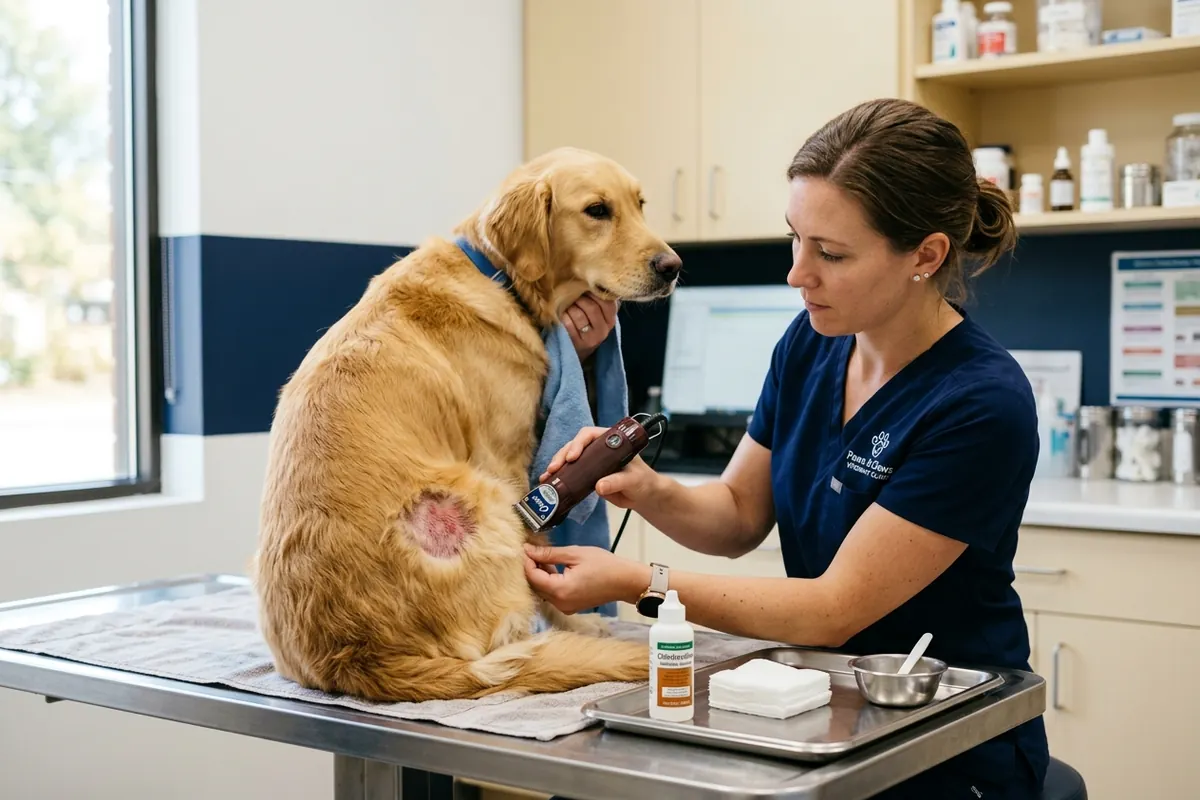
For moderate and severe hot spots, professional care moves things along faster and finds the cause. A vet will usually clip and clean the area properly, then reach for some combination of the following depending on severity, as outlined by veterinary sources like VCA Animal Hospitals:
- Topical or oral antibiotics when infection is established
- Anti-itch or anti-inflammatory medication, sometimes a short course of steroids, to break the itch cycle
- Pain control, since these lesions genuinely hurt
- Treatment of the underlying trigger, such as flea control, an ear-infection workup, or an allergy plan
With proper treatment, most dogs improve noticeably within three to seven days. If a hot spot keeps coming back, the vet will dig into the root cause, and that often points to allergies or recurring parasites rather than the skin itself.
Expected Healing Timeline
Owners do better when they know what normal recovery looks like, so here is a rough map for a treated hot spot. Use it to judge whether yours is on track.
| Time | What to expect |
|---|---|
| Day 0 to 2 | Oozing slows, redness softens, dog stops fixating once the cone is on |
| Day 3 to 5 | Surface dries, a scab forms, pain eases |
| Day 6 to 10 | Scab lifts, new skin underneath, itching fades |
| Day 10 to 21 | Hair regrows; full coat can take several weeks |
If the timeline stalls or reverses at any stage, the trigger is still active or the infection needs stronger treatment. That is a call-the-vet moment, not a wait-and-see one.
When to See a Vet
This is a YMYL topic, so I will be blunt. A hot spot is rarely an emergency, but the following signs mean you stop home care and get professional help. Do not gamble on these.
- The lesion is larger than a few inches, deep, or spreading despite care
- Thick pus, a strong foul odor, or heavy bleeding
- Your dog is feverish, lethargic, off food, or in obvious pain
- The spot is near the eyes, mouth, or genitals
- It has not improved within 48 hours of good home care, or it keeps coming back
- You are not sure it is a hot spot rather than ringworm, mange, or a deeper infection
- The dog is a puppy, a senior, or has other medical conditions
While skin trouble is on your radar, it helps to know your dog’s other symptom patterns too. If you have been chasing recurring infections, our guide on treating a dog UTI at home safely covers the same care-versus-clinic judgment for the urinary tract, and if ear scratching is the spark behind a facial hot spot, our piece on when to use dog ear drops walks through the ear side of that chain. For older dogs whose licking traces back to a sore leg, our dog leg brace guide is worth a look.
How to Prevent the Next One
Prevention is mostly about removing the itch before it starts. Year-round flea control is the highest-value habit, full stop. Dry your dog thoroughly after swims and baths, especially in the dense fur behind the ears and along the back. Keep the coat brushed and mat-free. Stay on top of ear cleaning if your dog is prone to ear infections. Work with your vet on an allergy plan if seasons or food keep flaring the skin, and ask whether omega-3 supplements fit the diet. For the bored or anxious lickers, more walks, more chew toys, and more engagement do real work. The American Kennel Club’s guidance on grooming and parasite prevention lines up with all of this.
One prevention point that does not get enough airtime: track where the hot spots land. A dog who keeps getting them on one cheek is telling you the ear on that side needs attention. A dog who keeps targeting one hip may have a sore joint underneath. The location is a clue, not a coincidence. Keep a simple note of date and spot, and a pattern usually emerges within a few episodes. That pattern is what finally ends the cycle, because it points your vet straight at the trigger instead of treating skin over and over.
Diet plays a quieter role too. Dogs on a balanced diet with adequate skin-supporting fats tend to have a sturdier skin barrier, which means a stray itch is less likely to spiral into an open wound. This is not a magic fix, and it will not stop a flea-allergic dog from reacting to bites, but it stacks the odds in your favor over a season. Ask your vet whether your dog’s current food covers those bases before you add anything.
Frequently Asked Questions
Can a dog hot spot heal on its own?
A very mild, early hot spot sometimes settles once the dog stops licking it, but most need at least basic home care to break the itch cycle, and many need a vet. Counting on it to vanish by itself usually lets it spread instead.
How fast does a hot spot spread?
Frighteningly fast. A small patch can grow from coin-sized to palm-sized within a single day if the dog keeps at it. That speed is exactly why getting a cone on early matters so much.
Are dog hot spots contagious to other dogs or people?
The hot spot itself is not contagious. The bacteria involved are normal skin residents. But if the real cause is ringworm or fleas, those do spread, which is another reason to confirm what you are dealing with.
Is a hot spot painful for my dog?
Yes. These lesions hurt and itch at the same time, which is why dogs attack them so hard. Expect your dog to flinch or snap if you touch it, and handle the area gently.
What can I put on a dog hot spot at home?
Cool water or a dilute, vet-safe chlorhexidine rinse, followed by keeping the area dry and the cone on. Skip human creams, peroxide, and greasy ointments unless your vet directs otherwise. When in doubt, ask the clinic before applying anything.
Why does my dog keep getting hot spots?
Recurring hot spots almost always mean the underlying trigger is unmanaged, usually fleas, allergies, or chronic ear problems. Treating the skin again and again without fixing the cause is a treadmill. Ask your vet to investigate the root.
Bottom Line
A dog hot spot looks alarming because it appears so fast, but the path through it is straightforward once you read the severity right. Stop the licking, dry the wound, treat the trigger, and watch the clock. Mild ones often turn the corner at home in a couple of days. Moderate and severe ones, and anything you are unsure about, belong with your veterinarian, who can break the infection and find what started it. None of this replaces a hands-on exam, so treat this guide as the map and your vet as the final word.