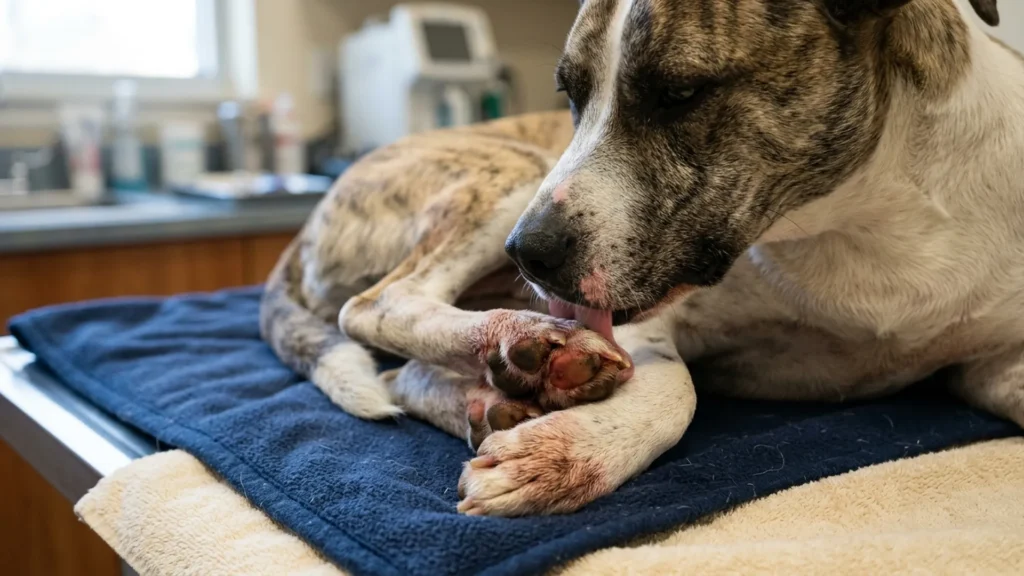
A dog paw yeast infection is an overgrowth of the yeast that normally lives in tiny amounts on your dog’s skin, set off most often by trapped moisture and allergies, and it announces itself with relentless paw-licking, redness between the toes, rusty-brown staining of the fur, and a sour, corn-chip smell. If your dog has been gnawing one foot at 2 a.m. and the fur between the pads has turned the color of weak tea, you are probably looking at yeast. The good news is that early cases respond well. The catch is that yeast on the paws is almost never the whole story, and treating the surface without finding the cause just resets the clock.
I am Cassiel Bendrothe. I cover dog health and symptoms with one rule: tell owners plainly which problems they can manage at home and which ones need a clinic now. Paw yeast lives on both sides of that line depending on how far it has gone, so let us read yours accurately. The guidance below leans on veterinary sources like VCA, the American Kennel Club, and Cornell, linked where it matters, alongside the patterns I have watched repeat across countless itchy-paw cases.
What a Paw Yeast Infection Actually Is
Yeast, specifically Malassezia, is a normal resident of canine skin. It only becomes a problem when conditions let it multiply out of control. The webbing between the toes is the perfect breeding ground: dark, warm, and prone to staying damp after walks, baths, or a dog who licks the same foot for hours. Once the population booms, it irritates the skin, the dog licks more, the licking adds moisture and breaks the skin barrier, and the yeast gets an even better home. It is a loop, and the loop is why these infections dig in so stubbornly.
Here is the part most articles bury: yeast is an opportunist, not usually the root cause. Something opened the door first. Allergies are the usual culprit, environmental ones most of all, because itchy allergic skin gets licked, and licked skin stays wet. That is why a dog with paw yeast in spring often has itchy ears and a belly rash at the same time. The paw is just where you noticed it.
It also helps to understand why the paws specifically. Dogs sweat through their paw pads, the spaces between the toes stay shaded and warm, and feet are the part of a dog that touches every wet surface in the world: dewy grass, melting snow, puddles, the kitchen floor you just mopped. Add a dog who licks for comfort, and you have built a greenhouse for yeast without meaning to. Once you see the paw as a moisture trap rather than just a foot, the whole condition makes more sense, and so does the fix, which is mostly about keeping that trap dry.
The Telltale Signs
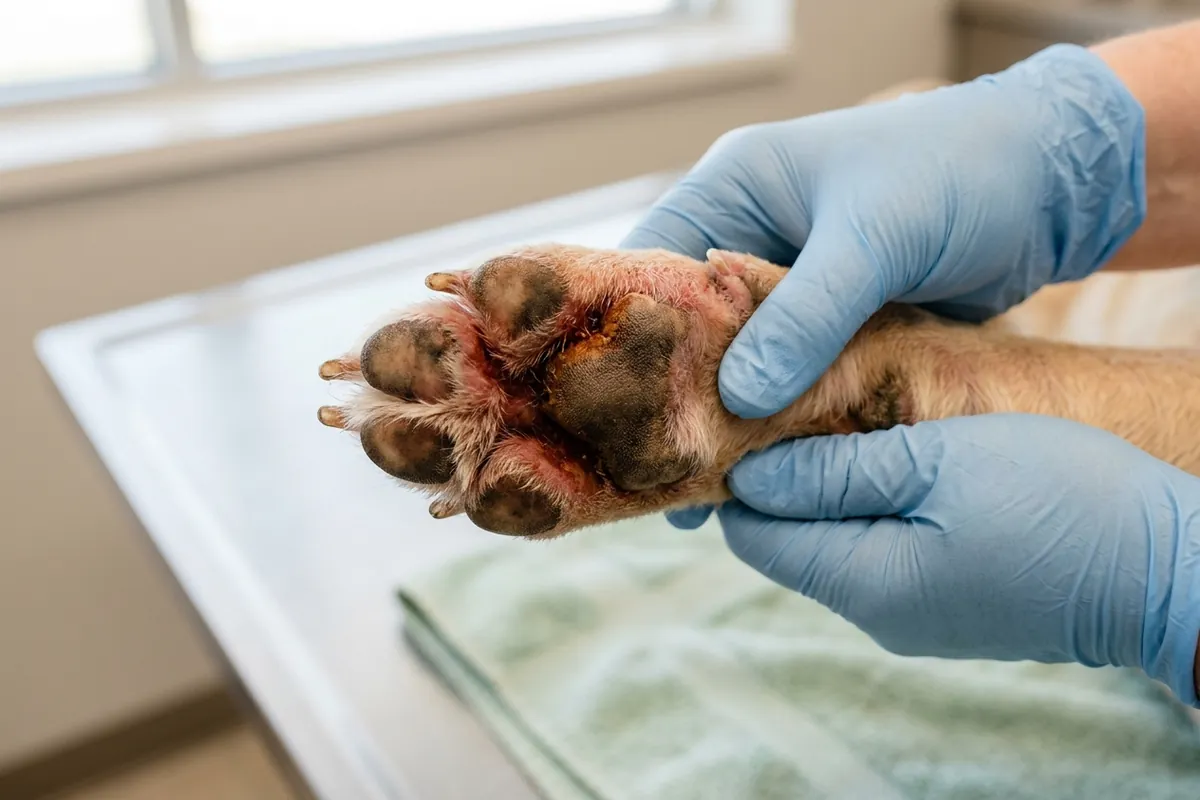
Paw yeast has a fairly distinct fingerprint once you know what to look for:
- Constant licking and chewing of the paws, often focused between the toes or on the underside.
- Reddish-brown staining of the fur on the feet and between the pads, the classic rust-colored tint from saliva plus yeast.
- That smell. A musty, yeasty, corn-chip or popcorn odor. Owners call it Frito feet. A faint version can be normal; a strong, sour one usually is not.
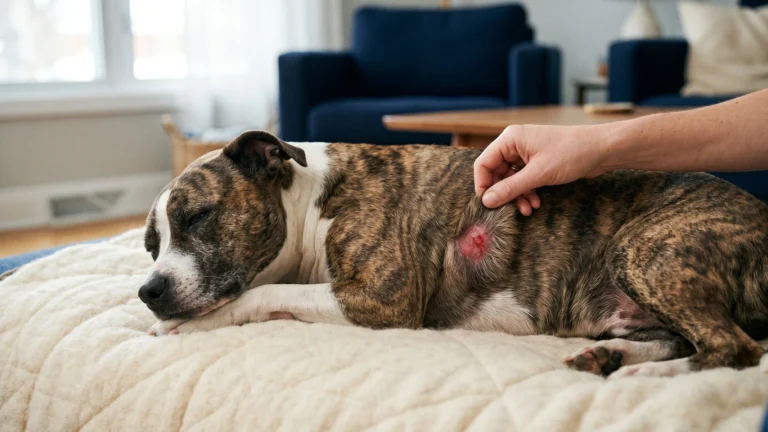
- Red, inflamed, sometimes greasy skin between the toes, with brown gunk at the nail bases.
- Thickened, leathery skin in chronic cases, sometimes with hair loss.
- Limping or reluctance to walk when the paws get sore enough.
The brown stain and the smell together are the strongest signal. A faint corn-chip whiff on otherwise normal-looking paws, with no licking, is often just ordinary skin flora and not worth panicking over.
Yeast, Bacteria, or Just Allergies? How to Tell Them Apart
This is the section the big pages leave out, and it is exactly where owners go wrong. Paws get infected by yeast, by bacteria, or both at once, and itchy allergic paws can look inflamed before any infection sets in. The fixes differ, so guessing wastes time.
| Clue | Yeast | Bacteria | Allergy only |
|---|---|---|---|
| Smell | Musty, corn-chip, sour | Foul, rotten, sometimes sweetish | Little or none |
| Discharge | Brown, greasy, waxy | Yellow or green pus, crusts | Usually none |
| Skin look | Red, thickened, brown-stained | Pustules, oozing, raw spots | Pink, irritated, but intact |
| Best fix | Antifungals | Antibiotics | Allergy management |
The honest catch: these overlap constantly, and the only way to know for sure is a quick in-clinic cytology, where the vet swabs the skin and looks under a microscope. It is fast and cheap, and it stops you from spending three weeks on the wrong product. If you have tried an over-the-counter antifungal for a week with zero change, that itself is a hint you are dealing with bacteria, allergy, or a mix, and it is time to get the swab.
What Drives It: Causes and Risk Factors
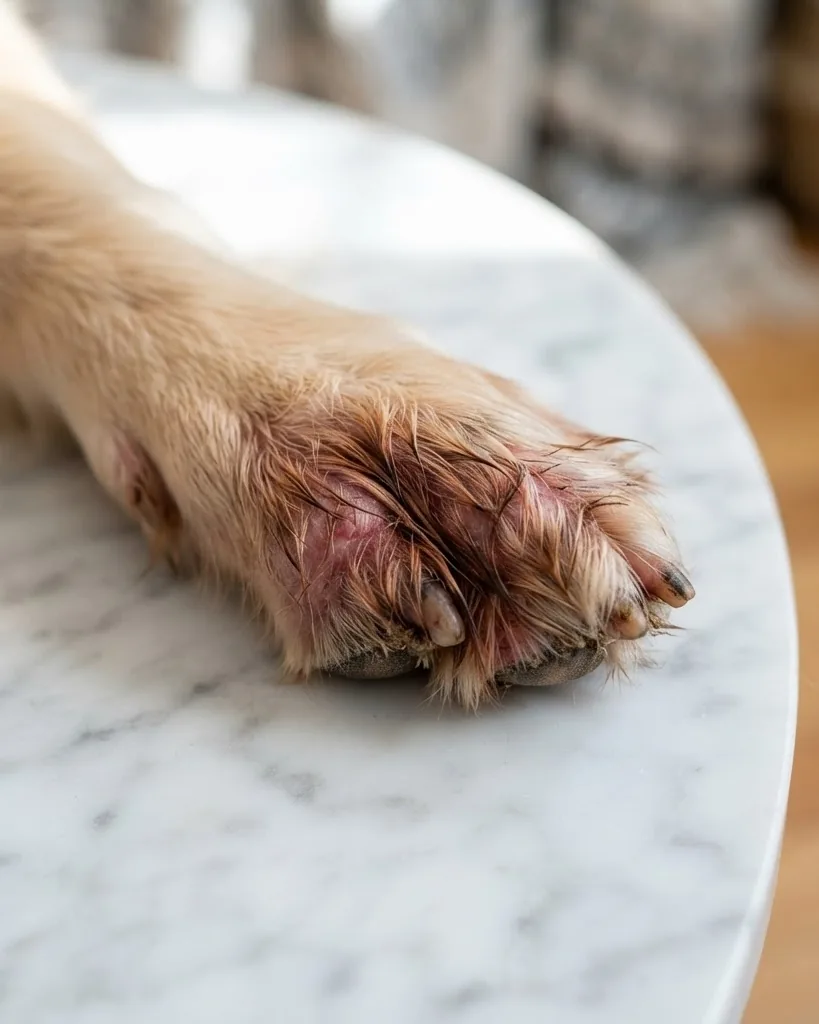
Yeast overgrowth almost always sits on top of one of these:
- Allergies, environmental and food, the number one underlying driver.
- Trapped moisture, from swimming, snow, puddles, baths, or a dog that licks one foot constantly.
- Skin folds and dense paw fur that hold dampness against the skin.
- A weakened immune system, or hormonal conditions like hypothyroidism and diabetes.
- Breed tendency. Cocker Spaniels, Poodles, Maltese, West Highland White Terriers, and Basset Hounds show up more often.
- Long-term antibiotics or steroids that disturb the normal skin balance.
If your dog gets paw yeast more than once or twice a year, the real assignment is finding the driver. The American Kennel Club’s allergy guidance is a sound starting point for understanding the allergy connection that sits behind so many of these cases.
Home Care for a Mild Case
If the paws are mildly red and stained, the dog is otherwise well, and the smell is recent, you can start supportive care while you watch. None of this replaces a diagnosis, and if it is not clearly better within a week, the vet takes over.
A simple, vet-friendly paw-soak routine is the backbone of home care:
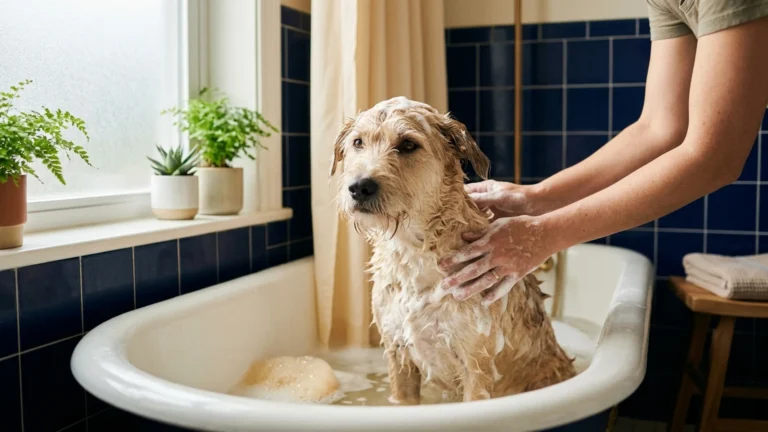
- Choose a soak. A common option is a dilute antifungal-friendly solution your vet approves, or a plain lukewarm water rinse for very mild cases. Some owners use a heavily diluted apple cider vinegar or Epsom salt soak, but only after a vet okays it, because broken or raw skin will sting and worsen.
- Soak the paws for three to five minutes, making sure the solution reaches between the toes.
- Dry thoroughly. This is the step people skip and the reason it fails. Pat between every toe with a clean towel until truly dry. Dampness feeds yeast.
- Repeat once or twice daily as directed.
- Trim the fur between the pads to cut down on moisture-trapping.
- Stop the licking with a cone or recovery sock so the paw can actually dry out.
Medicated antifungal wipes made for dogs are a reasonable add-on for mild cases. Keep the dog’s bedding clean and dry too, since a damp bed undoes your work overnight.
A word on expectations during home care. You are not trying to scrub the yeast away in a day; you are tilting the conditions back in your favor so the population shrinks on its own. That means the smell and staining fade gradually, not overnight. If you find yourself soaking the paws three times a day in desperation, stop and call the vet instead, because that level of effort usually means the case is past the mild stage or there is a second problem underneath. Steady, twice-daily, well-dried care beats frantic over-treatment every time, and over-wetting the paws in the name of cleaning them is one of the most common ways owners accidentally feed the very thing they are fighting.
What NOT to Do
A few common moves make paw yeast worse or mask it:
- Do not use human antifungal creams without vet guidance. Dogs lick them off, and some are not safe ingested.
- Do not use undiluted vinegar on raw or broken skin. It burns and can deepen the damage.
- Do not leave paws damp after soaks, walks, or baths. Wet feet are the whole problem.
- Do not keep treating the surface while ignoring the allergy or hormonal cause underneath.
- Do not skip the cone and let the dog re-wet the paw all night.
- Do not assume any corn-chip smell is an infection. A faint odor with no licking is often normal.
What the Vet Will Do
For anything beyond a mild, recent case, professional care is faster and finds the cause. As veterinary resources like VCA Animal Hospitals describe, a vet will usually confirm yeast with cytology, then build a plan that fits the severity:
- Topical antifungals: medicated wipes, sprays, mousses, or antifungal shampoos used as foot soaks
- Oral antifungal medication for stubborn or widespread cases
- Treatment of any secondary bacterial infection at the same time
- An anti-itch plan to break the lick cycle
- Most importantly, a workup for the underlying allergy or hormonal condition driving the recurrence
Expect patience. Topical-only mild cases may clear in a couple of weeks, but deeper or chronic infections often take four to six weeks or longer, and recurrent cases need ongoing allergy management. Follow-up appointments matter, because stopping treatment early is a classic way to relapse.
Recovery Timeline: What Normal Looks Like
| Time | What to expect |
|---|---|
| Days 1 to 5 | Licking eases once the cone is on; smell starts to fade |
| Week 2 | Redness drops, brown staining begins to clear, paws feel less greasy |
| Weeks 3 to 4 | Skin tone normalizes; mild cases often resolved here |
| Weeks 4 to 6+ | Chronic or deep cases finish healing; allergy plan continues to prevent relapse |
If you see no improvement by the end of week one of real treatment, or it gets worse at any point, the diagnosis or the product is wrong. That is a vet call, not a wait.
When to See a Vet
This is a YMYL topic, so I will be direct. Book the vet if any of these are true:
- The paws are very red, swollen, oozing pus, or bleeding
- Your dog is limping, won’t bear weight, or is in obvious pain
- The smell is strong and foul rather than faintly musty
- Home care has not helped within a week, or the infection keeps returning
- Your dog seems unwell overall, is off food, or is lethargic
- You cannot tell whether it is yeast, bacteria, or an allergy
- The dog is a puppy, a senior, or has diabetes, thyroid disease, or a weak immune system
While you are tracking paw and skin trouble, it pays to know your dog’s other symptom patterns. If itchy ears are part of the picture, our guide on when to use dog ear drops covers the ear side of the same allergy chain. If your dog is also straining or having accidents, our piece on treating a dog UTI at home safely uses the same home-care-versus-clinic judgment, and for a dog whose sore paws turn into a limp, our dog leg brace guide is worth a read.
Preventing the Next Round
Prevention is mostly moisture control plus allergy management. Dry the paws every time they get wet, between every toe, not just a quick wipe. Keep the fur between the pads trimmed. Stay on top of flea and allergy control, since itchy skin is the spark. Wash bedding regularly and keep it dry. For dogs that swim or walk in wet grass daily, a quick towel-and-check routine at the door does more than any product. The Cornell Riney Canine Health Center is a solid reference if you want to go deeper on the allergy management that keeps recurrences away.
One habit I push hard: when your dog gets paw yeast, note the season and what changed. A pattern that lines up with spring pollen or a new food is the clue that ends the cycle, because it points your vet straight at the trigger rather than treating feet over and over.
Diet deserves a mention because it gets oversold online. There is no magic anti-yeast food, and starving yeast by cutting carbs is not the slam-dunk some blogs claim. What does help is a balanced diet that supports a healthy skin barrier, plus managing any true food allergy your vet identifies through a proper elimination trial. If your dog’s recurrences track with a particular protein, that is a real lead worth chasing with professional guidance. If they track with the weather, the answer lives in environmental allergy management, not the food bowl. Either way, the takeaway is the same: chase the cause, not the symptom, and let evidence rather than internet folklore guide the changes you make.
Frequently Asked Questions
What does a dog paw yeast infection smell like?
Musty and yeasty, often described as corn chips or stale popcorn. A faint version can be normal skin flora, but a strong, sour smell paired with licking and brown staining points to overgrowth.
Can I treat a dog paw yeast infection at home?
Mild, recent cases often respond to a vet-approved paw-soak routine, thorough drying, trimming the fur, and a cone to stop licking. If it does not clearly improve within a week, or you are unsure it is yeast, see your vet for a cytology test.
Is apple cider vinegar safe for my dog’s paws?
Only heavily diluted and only on intact skin, and ideally after your vet okays it. On raw or broken skin it stings and can make things worse. It is a supportive rinse at best, not a cure.
How long does a paw yeast infection take to clear?
Mild topical-only cases can resolve in two to four weeks. Deeper or chronic infections often take four to six weeks or more, and recurrent cases need ongoing allergy management to stay clear.
Why does my dog keep getting paw yeast infections?
Recurrence almost always means an unmanaged underlying cause, usually allergies, sometimes a hormonal condition like hypothyroidism or diabetes. Treating the feet repeatedly without addressing the driver is a treadmill. Ask your vet to investigate.
Is a dog paw yeast infection contagious?
To other healthy dogs and to people, no, not in a meaningful way. The yeast is a normal skin resident. The reason one dog gets it and another does not comes down to their individual skin, allergies, and moisture, not contagion.
Bottom Line
A dog paw yeast infection is common, treatable, and frustrating mostly because it keeps coming back when the real cause goes unaddressed. Read the signs honestly, the brown stain and the corn-chip smell, distinguish yeast from bacteria with a vet swab when you are unsure, and remember that drying the paws is half the battle. Mild cases can turn the corner at home in a couple of weeks. Painful, oozing, or recurring ones belong with your veterinarian, who can confirm the diagnosis and chase down the allergy or condition feeding it. Use this as your map, and let your vet have the final word on your dog.